Upright exercise bikes are one of the easiest ways to get consistent cardio at home, especially in the UK where space, noise, and convenience matter. They’re low-impact, beginner-friendly, and ideal if you want something you can jump on for steady rides without turning your living room into a gym.
To make this roundup genuinely useful, I rode all five exercise bikes myself over different time spans, roughly 2 to 8 weeks per bike, and even longer on the Sole B94 and Schwinn 590U because I owned them. For context, I’m 75 kg and around 5ft 5in, so my comfort and fit notes are based on real riding, not guesswork.
In the reviews, I focus on what actually matters day-to-day: comfort, resistance feel, stability, noise, footprint, ease of moving the bike, and whether the console/app setup feels helpful or just pushes you into another subscription. If you want the quick overview, start with the comparison table — then jump to the bike that matches your budget and riding style.
Table of Contents

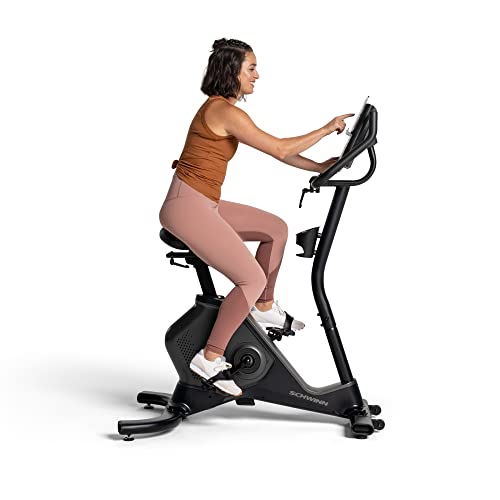
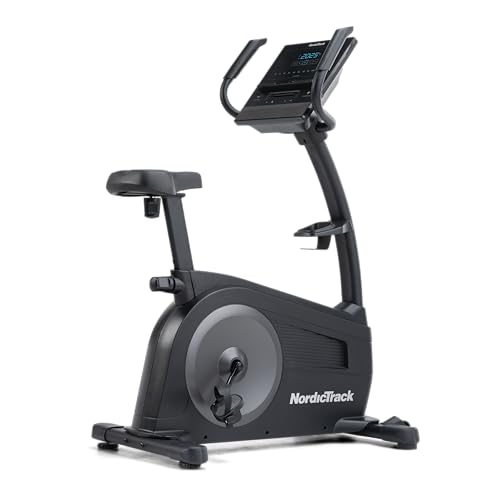


Top Upright Exercise Bikes UK: Detailed Comparison (2026)
| Criteria | Sole B94 | Schwinn 590U | NordicTrack GX | ProForm 225 | WinNow |
|---|---|---|---|---|---|
| Monitor (screen size) | 9-inch backlit LCD | 7-inch backlit LCD | 5-inch backlit LCD | 5-inch backlit LCD | 3-inch LCD (dark) |
| App | Sole app + Bluetooth | JRNY + Bluetooth | iFit + Bluetooth | iFit + Bluetooth | None |
| Resistance type + levels | Electronic magnetic (20 levels) | Electronic magnetic (25 levels) | Electronic magnetic (24 levels) | Electronic magnetic (20 levels) | Manual magnetic (8 levels) |
| Max user weight | 136 kg | 150 kg | 147 kg | 125 kg | 125 kg |
| User height range | 5ft 1in–6ft 4in | 5ft 0in–6ft 4in | 4ft 10in–6ft 5in | 5ft 0in–6ft 2in | 5ft 0in–6ft 2in |
| Comfort (my experience) | High | High | Medium | Medium | Basic |
| Noise level (at home) | Quiet–moderate | Quiet | Quiet | Quiet | Quiet–moderate |
| Footprint (space needed) | Medium | Medium | Medium | Smaller | Small |
| Adjustability | Strong | Strong | OK | OK | Limited |
| Best for | Comfort + build quality | Training + tech features | iFit riders | Value iFit starter | Cheap, simple cardio |
Sole B94 Upright Exercise Bike Review

After riding well over 1,000 miles on the Sole B94, I’m comfortable saying this is one of the most solid, gym-feeling upright bikes I’ve tested for home use. I used it for everything from steady endurance rides to proper suffering sessions — high-cadence work, tough intervals, and even the occasional “let’s see what max resistance feels like” effort. And the impressive bit is that it stayed calm and composed through all of it.
I originally picked the B94 over the Sole LCB mainly for affordability. The B94 is the sensible buy if you want something that feels premium without going full flagship. If money’s no object though, the LCB still wins on paper and on feel: a heavier 27 lb flywheel, more resistance levels, a more modern 10-inch touchscreen, and an even more polished ride. But in its own price bracket, the B94 is still a standout — and it’s the one I point people towards when they want serious build quality without the “subscription treadmill”.
Assembly was straightforward and took me under an hour, but the bigger story is how the bike behaves once you’re actually riding. On hard floors, it’s impressively stable — no wobble, no creaks, and no “cheap bike” flex, even when I was pushing higher resistance at a fast cadence. Noise-wise it’s genuinely home-friendly: I’d call it near-silent, and on my side it sat roughly around 40–60 dB, depending on how hard I was spinning and how much resistance I’d dialled in.
The electronic magnetic resistance gives you 20 levels, and in real training terms that’s more than enough. Most of my riding naturally landed around levels 6–12, my interval work usually sat around 12–16, and I rarely needed above 16 unless I was intentionally trying to see how punishing it could get. It’s absolutely capable of a proper workout — the only thing I’d flag is that the early jumps in resistance can feel a bit abrupt if you’re someone who prefers tiny, gradual changes.
I’m 5ft 5in and 75 kg, and getting my position right was easy thanks to the vertical + horizontal saddle adjustment, plus seat tilt. I’ve also seen it comfortably fit taller riders up to about 6ft 4in, which matches the brand’s guidance fairly well.
What I wouldn’t do is recommend it for shorter riders. In my opinion, the B94 isn’t a great match if you’re under about 5ft 1in — you may struggle to get the saddle position and knee angle dialled in properly, and it can feel like you’re reaching for a fit that never quite clicks.
One more real-world detail: it feels most stable on hard flooring. If you put it on carpet with a mat, you can sometimes feel a bit more movement during hard efforts. That also messes with one of the “nice-to-have” features: the wireless phone charging pad. If the bike shifts slightly during sprints, the phone tends to slide off the charging spot, so I didn’t find that feature reliably usable on carpet.
The 9-inch backlit LCD is simple, but it does the job — clear numbers, no fuss. Pairing with the Sole+ app has been excellent for me: it connects without drama, and I like the fact it’s free and not pushing you into a paid membership straight away.
And here’s the bit that makes this bike more interesting than most uprights: the B94 supports FTMS, which means you can use it for Zwift rides as well. In my experience, it works best if you use the QZ app as a bridge between the bike and Zwift — that setup does a much better job of syncing the bike’s data properly and enabling auto resistance in a way that feels smooth and consistent. If you’re a Zwift rider who wants upright comfort, that’s a big deal.
The B94 also has 10 preset programmes, and while they’re useful, the interface could be smarter. My main annoyance is that custom workouts feel buried and you can’t save them as quick favourites, so you end up doing a few extra taps every time you want to repeat the same interval session.
Mechanically, mine has been excellent — it really does feel built like a tank. The only ongoing irritations are small-but-real: there’s no power switch, so the screen stays on unless you unplug it, and Sole support has been unimpressive in my experience (I contacted them pre- and post-sale and didn’t get a reply).
Owner feedback I’ve seen lines up with a lot of this: plenty of people praise the build, quiet ride, and easy assembly. A few mention packaging arriving pretty battered (with the bike usually surviving fine), and there are occasional transit issues like a broken transport wheel — though at least in one case replacements were sent quickly.
Key Specs (Sole B94)
| Specification | Details |
|---|---|
| Bike type | Upright exercise bike |
| Resistance type | Electronic magnetic |
| Resistance levels | 20 |
| Flywheel weight | ~9 kg (20 lb) |
| Display | 9-inch backlit LCD |
| Workout programmes | 10 preset |
| App compatibility | Sole+ (Zwift possibility via QZ app) |
| Seat adjustment | Vertical + horizontal + tilt |
| Min/Max user height | 5ft 1in to 6ft 4in |
| Max user weight | 136 kg |
| Noise level (my testing) | Approx. 40–60 dB depending on effort |
| Item dimensions (L × W × H) | 122 × 58.4 × 27.2 cm |
| Item weight | 46 kg |
| Package dimensions (L × W × H) | 117 × 46 × 79 cm |
| Package weight | 53.5 kg |
| Power | AC adapter |
| Extras | USB charging, wireless charging pad, fan, speakers, holders |
Pros
- Rock-solid, stable ride on hard floors, even with fast cadence efforts
- Quiet enough for home use, roughly 40–60 dB in my sessions
- Resistance feels properly challenging — I trained mostly at 6–12, intervals 12–16
- Free Sole+ app with reliable Bluetooth pairing (no subscription pressure)
- FTMS support makes Zwift possible — best experience via QZ for auto resistance
- Plenty of comfort adjustment with fore/aft + height + seat tilt
Cons
- Not ideal for riders under about 5ft 1in
- Slight movement possible on carpet + mat during harder efforts
- No power switch (you’ll likely use a switched extension lead)
- Custom workouts are not quick to access and can’t be saved as favourites
- Customer support can be hit-or-miss
My verdict
If you want an upright bike that feels serious, rides quietly, and doesn’t trap you behind a subscription to see your own workout data, the Sole B94 is an easy recommendation. It’s not the best choice for very short riders, and the little annoyances (no power switch, clunky custom workout access) are real — but the ride quality is the reason I’ve put so many miles on it. It’s one of the few upright exercise bikes I’ve tested that genuinely feels like it can handle long-term, hard use.
Schwinn 590U Upright Bike Review

I owned the Schwinn 590U for about three months, and I used it exactly how most people buy an upright bike to use: a mix of steady rides, interval sessions, and quick workouts where you just want to get sweaty without overthinking it. In that role, it’s a genuinely strong value — especially in the UK market where you want something practical, compact, quiet, and easy to live with.
The resistance range is one of the most misunderstood parts of this bike. The first few levels are light, but that’s not a flaw for me — it’s actually useful. I’d usually sit at levels 1–5 for warm-up, then move to 8–12 for steady riding. For intervals, I pushed it much harder — up to level 20 when I wanted a proper “legs burning” effort — but I rarely went all the way to 25. Unless you’re very fit or you love grinding heavy seated climbs, most riders won’t live at the top end of the scale anyway.
Noise-wise, it’s very flat-friendly. It was a touch quieter than the Sole B94 in my home setup, and I’d put it at around 50 dB at the loudest when I was riding hard. It also felt stable on both hard floor and carpet, and I think that comes down to the design: the wide rear stabiliser just plants the bike down nicely, so it doesn’t feel twitchy when you increase cadence or resistance.
Space-wise, it’s “upright bike compact”. It took about the same space as the Sole, which I’d still call compact compared with air bikes (which sprawl) and especially recumbent bikes (which take up a surprising amount of room). And day-to-day, it’s easier to shift around than the Sole — it’s lighter, and moving it feels less like wrestling a small appliance across the floor.
The main downside in my ownership was the saddle. The shape and feel don’t scream “premium”, and once I started doing proper sessions, I could feel it becoming a weak link. I swapped mine out pretty quickly, and that fixed the problem. For me, the Velmia City seat worked really well — although saddle comfort is personal, so I still think the best seat depends on your body shape and riding style.
Schwinn advertises Zwift compatibility, and some users report that using QZ as a bridge helps with auto-resistance. I haven’t tested Zwift on the 590U myself yet, so I won’t claim it’s plug-and-play. If Zwift is your priority, I’d treat it as “possible, but not guaranteed plug-and-play.”
You can absolutely use the bike without paying for JRNY — you can ride, see your stats, and use the onboard functions. But in my view, you don’t get much from JRNY for free. The subscription only feels worth it if you’re genuinely going to use the trainer-led content, guided workouts, and tracking features enough to justify paying monthly. Some people will — and that’s fair — but I don’t consider JRNY a must-have to enjoy the bike itself.
Most long-term owners seem to praise the build quality and quiet ride, and the most common complaint I see is saddle comfort (which matches my experience). A few also mention the display not being ideal in low light depending on the version they get, this current version is fine even in low light condition.
Key Specs (Schwinn 590U)
| Specification | Details |
|---|---|
| Bike type | Upright exercise bike |
| Resistance type | Electronic magnetic |
| Resistance levels | 25 |
| Flywheel weight | 10 Kgs |
| Display | 7-inch LCD |
| Workout programmes | 13 preset |
| App compatibility | JRNY (Zwift possibility via QZ app) |
| Seat adjustment | Vertical + horizontal |
| Min/Max user height | 5ft 0in to 6ft 4in |
| Max user weight | 150 kg |
| Noise level (my testing) | Approx. 50 dB max |
| Item dimensions (L × W × H) | 119.4 × 82 × 144.3 cm |
| Item weight | 36.6 kg |
| Package dimensions (L × W × H) | 121 × 36 × 71 cm |
| Package weight | 43 kg |
| Power | AC adaptor |
| Extras | USB charging, Bluetooth speakers, media shelf, bottle holder, transport wheels |
Pros
- Great value if you want features without needing a subscription to ride
- Useful resistance spread: 1–5 warm-up, 8–12 steady, up to 20 for intervals (25 is there if you need it)
- Very stable on both hard floors and carpet thanks to the wide rear base
- Quiet for home use — around 60 dB max in my harder sessions
- Easier to move than heavier uprights (it’s lighter than the Sole)
- Handy extras: USB charging, speakers, media shelf
Cons
- Stock saddle is the weak point — I’d budget for a swap (Velmia City worked well for me)
- JRNY doesn’t offer much for free; subscription only makes sense if you’ll use the content
- Zwift: possible, but not guaranteed plug-and-play (some users report better results via QZ)
My verdict
The Schwinn 590U is a strong UK-market upright bike if you want something that feels stable, rides quietly, and gives you enough resistance to train properly — without making a subscription mandatory for basic use. The one thing I’d change immediately is the saddle, and if Zwift is your main reason for buying, I’d go in expecting a bit of setup rather than instant perfection. For steady cardio and intervals at home, though, it’s a genuinely enjoyable, sensible buy.
NordicTrack GX LE Upright Bike Review

I tested the NordicTrack GX LE over roughly 10 rides (it was sent to me for review), mixing steady early-morning spins with a handful of hard interval sessions later in the day. The headline is simple: when this bike is discounted (especially under ~£500), it becomes a brilliant option for anyone who enjoys guided training and wants the bike to automatically adjust resistance without the heavier, more “commercial” feel (and cost) of the Sole B94 or Schwinn 590U.
In terms of ride feel, it’s smooth and controlled across the 24 digital resistance levels, and it’s quiet enough for normal home use—in my space it was in the same “won’t wake the house” category as the Sole and Schwinn. It didn’t bother my wife when she was sleeping in the next room, but I still wouldn’t ride it in the same bedroom as someone asleep because you’ll always get some mechanical and drivetrain noise when you pedal hard.
Comfort-wise, this was a pleasant surprise. The seat is wider and firmer than the Sole and Schwinn saddles, and for me that actually helped on longer rides. For 40–60 minute sessions, it stayed supportive; for tougher interval rides, my padded cycling shorts made a noticeable difference (as they do on most bikes). The handlebars, however, are the weak point. They’re fine for a basic upright posture, but they’re too simple for long lean-forward efforts—no nice flat section to rest on, and nowhere near as versatile as the Schwinn, and especially the Sole. Also, because the handlebar angle isn’t adjustable, you can’t fine-tune the fit the way you can on the more premium uprights. You can adjust the seat and reach the bars easily, but you won’t get that “perfect cockpit” feeling if you’re picky.
One detail I really liked: the pedals. They feel better than the pedals on the Sole and Schwinn, and the strap system reminded me of what I’m used to on Technogym bikes in gyms. Honestly, these were the best pedals of any upright bike in this roundup. The GX LE was also very stable at high cadence—no twitchiness, no wobble—though it’s worth noting it’s not step-through, so the central frame is higher. Mounting it is still easy for most people, but you do need decent balance, especially compared with the Schwinn.
Now the big “ecosystem” point: this bike has no built-in workout programmes stored in the console. What you do get is a solid manual mode (you ride and control resistance yourself, and track your stats), and then iFit is where the guided workouts live. Pairing is straightforward: install iFit on a tablet/phone/TV, start pedalling, connect via Bluetooth in the app, and you’re in. iFit is the reason this bike is so engaging—workout variety is excellent, and the bike can follow trainer resistance so sessions feel coached rather than DIY. The included trial period is more than enough to decide if you’ll actually use iFit long-term or stick with manual riding and your own entertainment.
A practical annoyance: if you use a larger tablet on the media shelf, it can block the 5-inch display, so you’re choosing between big-screen coaching and seeing your on-bike stats clearly.
Out of the box, the GX LE is iFit-first, not “Zwift-first.” You can often improve third-party app use via QZ app as a bridge, but I haven’t personally completed the full QZ → Zwift setup on this bike yet, so I won’t sell it as a guaranteed feature. Also, the manual is pretty clear that Bluetooth support is intended for iFit and Bluetooth heart-rate monitors, and that other Bluetooth connections aren’t officially supported—so if Zwift is your priority, treat it as possible with tinkering, not plug-and-play promised.
Quick ownership tips from the manual: register the bike on iFITsupport.eu (especially within the first 28 days) to make sure your warranty is fully activated. The console is designed to connect to iFit and Bluetooth Smart heart-rate monitors — other third-party Bluetooth connections aren’t officially supported, so Zwift/QZ can be more of a workaround than a guaranteed feature. Also, check that demo mode is off if your console won’t sleep, and if the bike arrives cold, let it warm up before plugging it in.
Key Specs (NordicTrack GX LE)
| Specification | Details |
|---|---|
| Bike type | Upright exercise bike |
| Resistance type | Electronic magnetic |
| Resistance levels | 24 |
| Flywheel weight | 9 kg inertia-enhanced flywheel |
| Display | 5-inch LCD |
| Workout programmes | None |
| App compatibility | iFit (Zwift possibility via QZ app) |
| Seat adjustment | Vertical + horizontal |
| Min/Max user height | 4ft 10in to 6ft 5in |
| Max user weight | 147 kg |
| Noise level (my testing) | Approx. 60 dB max |
| Item dimensions (L × W × H) | 106.4 × 62.2 × 138.4 cm |
| Item weight | 46.4 kg |
| Package dimensions (L × W × H) | 109 × 40.4 × 63 cm |
| Package weight | 54.4 kg |
| Power | AC adaptor |
| Extras | Fan, USB-C charging, speakers, Bluetooth headphone support, device shelf |
Pros
- Fantastic value when discounted (especially under ~£500)
- iFit variety + auto-resistance makes training more engaging than manual-only riding
- Quiet and stable, including at higher cadence
- Supportive saddle for longer sessions (and padded shorts help on hard intervals)
- Best pedals in this roundup, with a gym-style strap adjustment feel
- Compact footprint for a smart upright
Cons
- No built-in workout programmes on the console (manual mode is fine, but training content lives in iFit)
- Basic handlebars with limited hand positions; not great for leaning-forward efforts
- Handlebar angle isn’t adjustable, so fit fine-tuning is limited
- Not step-through: mounting needs a bit more balance than the Schwinn
- Large tablets can block the 5-inch display
My verdict
The NordicTrack GX LE is at its best as a quiet, compact, iFit-powered upright. If you enjoy trainer-led content and want the bike to follow resistance automatically, it’s one of the most enjoyable options in this price bracket—especially when it’s discounted under ~£500. You’re giving up premium cockpit adjustability and multi-grip handlebars compared to the Sole and Schwinn, but you’re getting a smooth ride, excellent pedals, strong stability, and an iFit experience that’s genuinely hard to beat for variety.
ProForm 225 CSX Upright Bike Review

I rode the ProForm 225 CSX for about three weeks, mostly steady-paced cardio, and it’s one of those bikes that makes sense only when you judge it in the right lane. It’s a compact, iFit-friendly upright that can be brilliant value at roughly £345, but it didn’t feel confidence-inspiring enough for my hardest interval sessions at 75 kg and 5’5″. If you’re lighter than me, or you keep intervals seated and controlled, you can absolutely get a solid workout out of it — I just wouldn’t call it an “all-out sprint” bike.
The first thing you notice is that the overall build doesn’t have the heft of the Sole B94, Schwinn 590U, or even the NordicTrack GX LE. That’s not a surprise at this price, and I’m not holding it to a £900–£1,200 standard. But it does show up when you push the bike hard: steady rides feel smooth and predictable, while high-cadence surges and harder resistance bursts feel less planted. It’s not unsafe — it’s just not the kind of sturdy, “locked in” platform I want when I’m doing proper interval work.
Comfort is another area where the price shows. The saddle is usable, but for me it’s not in the same league as the NordiTrack or Sole seats. I could feel saddle soreness creeping in after around 30 minutes, and if I were keeping the bike long term, I’d strongly consider swapping the saddle. The pedals are basic strap-style pedals — similar everyday feel to what you get on the Schwinn — and they do the job, but nothing about them feels premium.
Where the 225 CSX does shine is practicality, especially for UK homes. This bike has a genuinely compact footprint at 89 cm long by 53 cm wide, and it weighs about 31 kg, so it’s much easier to live with in a flat or smaller spare room than bulkier uprights, and miles easier than most recumbents. The max user weight is 125 kg, which is decent for a compact home bike in this price bracket.
On the training side, it’s important to set expectations properly. You can ride it perfectly well in manual mode with no subscription — you can adjust resistance on the console and track your stats, and the console’s scan/custom scan functions are genuinely useful if you like seeing specific metrics rotate rather than being forced into one fixed display. But realistically, this bike is at its best when you treat it as an iFit bike, because that’s how you get the more engaging trainer-led experience and the resistance changes that keep workouts feeling coached rather than DIY.
One thing I’m strict about mentioning because it saves people hassle: the manual is very clear that Bluetooth support is intended for iFit and Bluetooth Smart heart-rate monitors. Other Bluetooth connections aren’t officially supported. So if someone is buying this mainly for third-party apps like Zwift, I’d treat it as a “nice if it works” situation rather than anything close to plug-and-play.
Noise-wise, it stayed pleasantly quiet during my test period, and nothing developed any odd sounds in those three weeks. I can’t promise long-term durability from such a short test window, but it didn’t feel flimsy — more like a bike that should last a couple of years if it’s used sensibly and maintained.
A few small manual details are actually worth knowing because they solve real buyer headaches. If the bike arrives in winter cold, it’s smart to let it warm to room temperature before plugging it in. If the console doesn’t behave normally after a ride, demo mode can be the culprit. The USB-C port is for charging only, so don’t expect data or audio through it. The manual also recommends tightening the pedals weekly, and if you ever feel pedal slip at high resistance, it even explains how to tighten the drive belt — not something most people will need, but it’s reassuring that it’s addressed.
Key Specs (ProForm 225 CSX)
| Specification | Details |
|---|---|
| Bike type | Upright exercise bike |
| Resistance type | Electronic magnetic |
| Resistance levels | 20 |
| Flywheel weight | 6.8 kg |
| Display | 5-inch LCD |
| Workout programmes | None |
| App compatibility | iFit (Zwift possibility via QZ app) |
| Seat adjustment | Vertical + horizontal |
| Min/Max user height | 5ft 0in to 6ft 2in |
| Max user weight | 125 kg |
| Noise level (my testing) | Approx. 50 dB max |
| Item dimensions (L × W × H) | 89 × 53 × 146 cm |
| Item weight | 31 kg |
| Package dimensions (L × W × H) | 104 × 36 × 66 cm |
| Package weight | 35 kg |
| Power | AC adaptor |
| Extras | Fan, Bluetooth audio speakers, USB-C charging port (charging only) |
Pros
- Compact footprint (89 × 53 cm) and only 31 kg, so it’s genuinely easy to fit into smaller UK rooms and move when needed.
- Quiet ride during my three-week test — great if you’re training while someone’s working or resting nearby.
- iFit-ready without needing a built-in screen; once connected, workouts feel far more coached and engaging than pure manual riding.
- Works perfectly in manual mode without a subscription, and the scan/custom scan display is handy for tracking stats your way.
- Adjustable seat (height + fore/aft) makes it easier to dial in a decent fit.
- Manual includes useful “real life” fixes like levelling feet, pedal tightening, and even drive belt tightening if pedals ever slip.
Cons
- Not as stable or sturdy as the Sole B94, Schwinn 590U, or NordicTrack GX LE — I didn’t love it for hard, high-cadence intervals at 75 kg.
- The saddle isn’t very forgiving for longer rides; I felt soreness creeping in after about 30 minutes (I’d swap it if I owned it).
- Bluetooth support is essentially iFit + Bluetooth Smart heart-rate monitors only; third-party app compatibility isn’t guaranteed.
- Feels more “budget home bike” than “gym-grade”, which is fine — just don’t expect that heavy, locked-in ride feel.
- Max user weight is 125 kg, which is solid for the price but lower than the heavier-duty bikes in this roundup.
My Verdict
In this roundup, I position the ProForm 225 CSX as the sensible budget pick when you want the iFit ecosystem without paying NordicTrack money. If the Schwinn 590U and NordicTrack GX LE are discounted and only about £150 more, I’d personally stretch the budget because they feel more stable and “grown up,” especially for intervals. But when those bikes jump back to full price, the 225 CSX becomes a genuinely tempting option for steady cardio riders who want something compact, quiet, and iFit-capable without spending big.
WINNOW Upright Exercise Bike Review

If you’re shopping under £200 and you just want quiet, simple cardio in a small room, the WINNOW does the basics better than I expected — but it’s also the easiest bike in this roundup to outgrow. I bought it and used it for a few weeks and for steady rides it was totally fine, especially if your goal is just daily movement while you watch something.
Where it falls apart is intensity: at 90 rpm it felt noticeably less planted than the other four bikes, and I genuinely didn’t enjoy doing intervals on it because the frame and ride feel are just too “light-duty”. The 8-level manual magnetic resistance is usable, but it’s coarse compared to 20–25 level bikes — the jumps feel bigger and the top end simply isn’t as strong. I spent most of my time at levels 6–8, and level 8 was basically “as hard as it gets”.
Noise is actually a strong point here. Because it’s manual resistance with no motorised system, there’s less mechanical noise overall — I’d put it around 40–50 dB max in my home, which is very neighbour-friendly. The console is basic and impossible to see in the dark but practical in daytime: it tracks the usual stats (time, speed, distance, calories) and it has pulse grips — I treat those as “roughly in the right area”, not something I’d train by, but they’re useful for a quick check.
One thing I’d call out for buyers is the “real world” assembly and moving experience: the instructions are generally clear, but there’s a fiddly internal hook/cable step during assembly that can feel like a three-hands job, and once it’s built, it’s not like folding bikes that you’ll want to drag up and down stairs. It does have front transport wheels, but on hard floors they can be a bit meh — more “shuffle” than “roll” — so I’d build it in the room you’ll use it and put a mat underneath to protect flooring and help with stability.
Fit-wise, it worked for me, and there are reports of taller riders (around 6’3″) getting a workable setup too — but I still wouldn’t recommend it if you are taller than 6’2″. Comfort is what you’d expect at this price: the saddle is okay for short rides, but once you push past 40 minutes, most people will want padded shorts or a seat cover.
And my biggest “buyer beware” is weight and long-term sturdiness: I don’t recommend it for anyone above ~90 kg, not because it can’t hold you on day one, but because everything about the bike — from the seat to the overall build — feels minimalist, and heavier riders doing harder sessions are simply more likely to loosen things up over time.
If you want proper stability for intervals, finer resistance steps, or any meaningful app ecosystem, this isn’t it. But if your aim is cheap, quiet cardio in a tight UK space, and you’re realistic about what £165 buys, it can still be a decent starter bike.
Key Specs (WINNOW)
| Specification | Details |
|---|---|
| Bike type | Upright exercise bike |
| Resistance type | Manual magnetic |
| Resistance levels | 8 |
| Flywheel weight | 4 kg |
| Display | 3-inch basic |
| Workout programmes | None |
| App compatibility | None |
| Seat adjustment | Only vertical |
| Min/Max user height | 5ft 0in to 6ft 2in |
| Max user weight | 125 Kgs |
| Noise level (my testing) | Approx. 40–50 dB max |
| Item dimensions (L × W × H) | 83 × 58 × 124 cm |
| Item weight | 25 kg |
| Package dimensions (L × W × H) | 100 × 34 × 65 cm |
| Package weight | 30 kg |
| Power | 2 AA batteries |
| Extras | Bottle and tablet holders |
Pros
- Very quiet in real use (manual system, no motor noise)
- Cheap entry point for daily steady-state cardio
- Compact and simple — no app setup, no subscription nonsense
- Basic console + pulse grips are fine for casual tracking
- Pedal straps + bottle holder are useful, everyday features
Cons
- Not stable enough for proper intervals (especially at ~90 rpm+)
- 8 resistance levels feel coarse and the top end is limited
- Assembly can be fiddly (internal cable/hook step), easier with two people
- Transport wheels are weak — moving it around regularly is a pain
- Not my pick for heavier riders (~90 kg+) or households with multiple serious users
My Verdict
For me, the WINNOW is a “bare-minimum, under-£200 cardio bike” that works best for steady rides in a small space, especially if you care about low noise more than training features. It’s not the one I’d pick for hard intervals, high-cadence sprints, or heavier riders (I wouldn’t recommend it above 90 kg) because the stability and resistance steps just don’t feel as confident as the other four bikes in this guide. But if your goal is simple: get on, pedal, track the basics, and build a daily habit without disturbing the house — it does that job. If you’ll ride 45+ minutes, plan on padded shorts or a seat cover; after week one, re-tighten bolts (budget bikes benefit from a quick check); and if you’re tall, double-check seat-post extension and your knee bend at the bottom of the stroke before you commit.
Upright vs Recumbent vs Spin vs Air Bike: Which Type Should You Choose?
When people ask me “upright vs recumbent bike” or “spin bike vs upright”, what they’re really asking is: what will feel good at home, what will I actually stick with, and which bike matches my training style? I’ve tested all four types over the years, and they’re honestly built for very different goals. Here’s how each one feels in real life, who it suits, and what I’d choose if you want quiet daily cardio vs proper intervals and HIIT.
Quick pick (if you just want the answer)
- Choose an upright bike if you want quiet daily cardio, a smaller footprint, and a normal “get on and ride” feel.
- Choose a recumbent bike if your priority is comfort, back support, and low-impact riding.
- Choose a spin bike if you want harder training, high cadence, and workouts that feel closer to outdoor cycling.
- Choose an air bike if you want HIIT and conditioning, don’t mind noise, and you like the bike to fight back harder the more you push.
| Criteria | Upright bike | Recumbent bike | Spin bike | Air bike |
|---|---|---|---|---|
| Noise level | Low | Low | Low–medium | High |
| Resistance feel/tech | Usually magnetic, often electronic levels | Usually magnetic, often electronic levels | Magnetic or friction (more “training” feel) | Air resistance scales with effort |
| Comfort/posture | Upright, moderate comfort | Most comfortable | More aggressive, forward-leaning | Demanding, full-body |
| Best for | Quiet daily cardio, steady rides | Comfort, rehab, low-impact consistency | Intervals, cadence work, training feel | HIIT, conditioning, max intensity |
| Who should avoid | If you want full-body HIIT | If you hate reclined/seated feel | If you want maximum comfort | If you need low noise/low intensity |
| Space needed | Medium | Largest | Medium | Medium |
| Adjustability | Seat (sometimes fore/aft too) | Seat varies by model | Seat + often handlebars | Mostly seat only |
| Typical UK price range | £150–£1,000 | £250–£1,200 | £200–£3,000 | £500–£1,100 |
| Calories per hour (very approximate) | Effort-dependent | Effort-dependent | Higher potential intensity | Highest potential intensity |
Upright Bikes: Quiet Daily Cardio with a Smaller Footprint

An upright bike is the most “normal bike-like” option indoors. It feels like casual outdoor pedalling, just more upright and more comfortable for steady cardio. This is the type I recommend most often for people who want a quiet, simple routine — 20 to 45 minutes a day, TV on, low fuss.
The only thing I’ll say: uprights can vary a lot in stability, especially on cheaper models. If you plan to sprint or do hard intervals, you want one with a solid frame and decent resistance steps.
Recumbent Bikes: Most Comfortable for Back Support

Recumbents are the comfort kings. You’re leaning back with support, legs out in front. It feels like seated cardio where your back can relax while your legs do the work. This is the type I’d pick for anyone who’s dealing with back sensitivity, rehab, or just wants a bike they can do consistently without feeling beat up.
The trade-off is space — recumbents usually take up more room, and they don’t feel as “cycling-like” if that matters to you.
Spin Bikes: Best for Intervals, High Cadence, and Training Feel

Spin bikes are where indoor cycling starts to feel like training. You’re more forward, you can ride at higher cadence, and the riding experience tends to feel more natural at intensity. This is the type I choose when intervals matter — especially if you like structured workouts, cadence targets, or pushing hard out of the saddle.
The downside is comfort. A spin posture asks more from your hips/hamstrings and your saddle tolerance. If comfort is your top priority, this won’t be your first pick.
Air Bikes: Best for HIIT and Full-Body Suffering (In a Good Way)

Air bikes are basically HIIT machines. The harder you pedal (and push/pull the arms), the more resistance you create. It feels like a full-body conditioning test, which is why they’re brilliant for short, nasty sessions — but they’re rarely quiet, and they’re not the most relaxing thing to do after a long day.
If you live in a flat or have neighbours close by, I’d think twice unless you’re sure noise won’t be a problem.
Upright Exercise Bike Buyer’s Guide UK: What Actually Matters


If you’re trying to choose the best upright exercise bikes in the UK, this is the stuff that actually matters in real use — resistance feel, stability, comfort, noise, app support, and fit. I’ve tested a mix of budget and mid-range uprights for this roundup, and these are the buying points that genuinely change the day-to-day experience (not the marketing fluff).
Heart-Rate Tracking: What Actually Works (and What Doesn’t)

Heart-rate tracking is one of the simplest ways to make your training more consistent — but it’s also where a lot of UK buyers get caught out.
- Wrist trackers (Apple Watch/Fitbit/Garmin watches) are the easiest option. They’re convenient and decent for steady rides, but they can lag a bit during intervals or when your hands are sweaty.
- Chest straps are still the most reliable for accuracy, especially for intervals and zone training.
- The key detail: many upright bikes only support Bluetooth Smart heart-rate monitors (and some only support HR straps inside their own ecosystem). So if you already own a strap, check it’s Bluetooth Smart and not something older/odd that won’t pair.
If you’re doing most rides in a steady “fat burn” zone, being roughly in 50–70% of max heart rate is usually the sweet spot. If you’re doing harder cardio or intervals, you’ll naturally spend more time above ~70% — the main point is consistency, not chasing perfect numbers.
Resistance Type: Manual vs Electronic (and Why It Matters)

Resistance is the “engine” of an upright bike — it decides whether the bike feels like a toy or a proper training tool.
- Manual magnetic resistance (a knob, usually 8–16 levels) is simple, quiet, and low maintenance. It’s totally fine for steady cardio, but the jumps between levels can feel a bit blunt — especially if you’re trying to do structured intervals.
- Electronic magnetic resistance (buttons, usually 20–25+ levels) gives you finer control and makes interval sessions easier because you can adjust quickly without reaching down mid-ride.
Also, anything claiming “auto resistance” usually means app-controlled resistance, which leads to the next point
Stability and Build: What Changes When You Ride Hard

This is where people waste money, so I’m blunt about it:
- Some bikes are basically iFit-first: the best experience happens when you use iFit on your phone/tablet, and features are built around that.
- Some bikes say “Bluetooth” but it’s only for heart-rate straps + their own app (not open app compatibility).
- If you want Zwift / Kinomap / third-party apps, you want a bike with proper open Bluetooth compatibility (and ideally a track record of working with those apps in the real world).
If you’re happy riding without apps, that’s also fine — quiet manual mode cardio is still cardio, and you can get ridiculously consistent results that way.
App Compatibility: iFIT vs “Bluetooth” vs Zwift Reality

This is the thing most buyer guides skip, and it’s the difference between “I enjoy this bike” and “I hate this bike”.
- On an upright bike, high cadence (say ~85–100 rpm) exposes weaknesses fast. Budget bikes can develop a bit of wobble, especially if you’re pushing resistance and cadence together.
- A bike that feels fine at steady pace can feel less planted once you start doing harder efforts.
- Generally, a more solid frame, better base, and better overall mass makes the bike feel calmer — and it makes intervals less annoying.
If you know you’ll do hard intervals regularly, stability should be a top priority (even if it means spending a bit more).
Bike Accessories That Actually Matter in Real Life

Accessories sound boring until you’ve owned an upright exercise bike without them. Here is what to look for in accessories:
- Water bottle holder: Sounds basic, but I genuinely miss it the second a bike doesn’t have one.
- Stable device shelf: It should hold your phone/tablet without wobble, especially when you’re riding at higher cadence.
- Easy-reach controls: Resistance buttons/dial placement matters when you’re sweaty and don’t want to break your rhythm mid-ride.
- USB/charging port: Usually charging only (no data or audio). Still super handy for longer rides so your device doesn’t die.
- Built-in fan: Actually useful for indoor cycling, especially in UK summer or small rooms with poor airflow.
- Speakers/Bluetooth audio: Nice to have, but I still prefer headphones for better sound and less disruption at home.
Fit and Adjustability: How to Get a Proper Riding Position


A surprising number of returns happen because the bike simply doesn’t fit properly. Here’s what I’d check:
- Seat height range: make sure you can get full leg extension comfortably.
- Fore/aft seat adjustment: this is the underrated one — it helps you dial in knee position and reduces discomfort.
- Handlebar positions: more grips = more comfort over longer rides. If the bars are basic, it can be harder to find a comfortable “lean forward” posture.
- Knee bend at the bottom of the stroke: you want a slight bend, not a locked leg. If you’re tall, double-check the seat-post extension before buying.
Final Verdict: Which Upright Exercise Bike Should You Buy?
After testing these upright bikes back-to-back, here’s my honest takeaway for anyone shopping the best upright exercise bike in the UK: upright bikes are brilliant for quiet daily cardio and smaller spaces, but not all of them feel equally stable once you start pushing cadence and intensity. If you know you’ll do proper intervals (90+ rpm, heavier breathing, harder efforts), stability and resistance quality matter way more than flashy features. If you’re more into steady rides, comfort, and keeping noise down in a flat, you can save money and still get a great routine going — you just need to be realistic about what a budget frame and basic resistance can (and can’t) do.
- Best all-rounder for stability + long-term feel → Sole B94
This is the one I’d buy if I want the most planted ride, smoother resistance, and a bike that feels “proper” even when I’m working hard. - Best for structured training + app-style motivation → Schwinn 590U
If you like a more guided, data-driven vibe and you’ll actually use the console/app ecosystem, this one makes workouts feel more “planned” and less random. - Best iFIT experience without going huge on price → NordicTrack GX LE
If you want iFIT auto-resistance style training and a compact upright that stays quiet, this is the best fit — just know it’s very iFIT-first. - Best budget way into iFIT when prices make sense → ProForm 225 CSX
When it’s around the mid-£300 range, it’s a solid entry point for quiet steady rides + iFIT access, but it’s not the bike I’d pick for hard interval work. - Best under-£200 for simple, quiet cardio → WINNOW
This is for beginners who want the bare minimum spend, low noise, and steady pedalling — I’d skip it if you’re heavier, want multiple users, or plan to do intervals often.
