If you need an exercise bike that can disappear into a corner after your workout, a folding bike can make a lot of sense. I’ve personally tested more than a dozen folding exercise bikes over the years in real home conditions, including small-room setups, carpet and hard-floor use, folding and unfolding, seat comfort, stability, resistance feel, monitor usability, and how practical each bike is to live with day to day in a UK home.
Not all folding bikes are equally good, though. Some are quiet, stable, and easy to store, while others feel awkward to mount, flimsy at higher cadences, or simply too light on resistance to be worth buying. In this guide, I’ve picked the best folding exercise bikes currently worth considering in the UK based on my own use, focusing on what actually matters at home: stability, comfort, ease of folding, noise, portability, resistance feel, and overall value for small flats and shared spaces.
My Top Picks: Best Folding Exercise Bikes in the UK (2026)
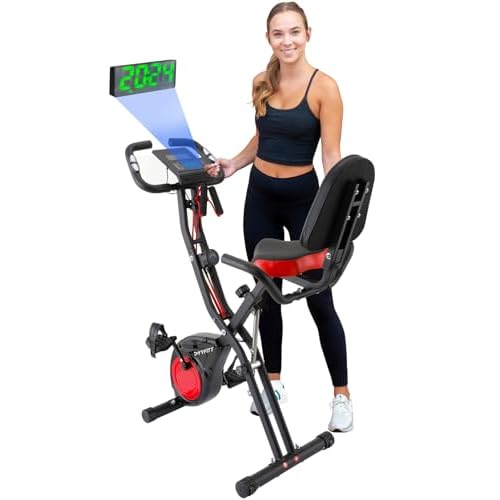
Best Overall: YYFITT Foldable Exercise Bike
If I had to recommend one bike for most people, this is it. It’s the most comfortable and adjustable option I tested, with a stable ride and practical features like an adjustable backrest and tablet holder.
Best Value for Comfort: Magic Life Folding Exercise Bike
This is the best balance of comfort and price. It’s quiet, stable, and easy to use, making it ideal for light cardio, rehab, or daily movement in a small flat.
Best Lightweight Option: ATIVAFIT Foldable Exercise Bike
The easiest bike to move and store. It’s compact, simple, and perfect for casual workouts, but not ideal for longer or more intense sessions.
Best for Smallest Spaces: Ultrasport F-Bike Folding Exercise Bike
The most compact option I tested. It’s basic but extremely space-efficient, making it a good choice if storage is your top priority.
Compare the Best Folding Exercise Bikes in the UK (2026): Features at a Glance
| Feature | YYFITT | Magic Life | ATIVAFIT | Ultrasport |
|---|---|---|---|---|
| Best for | Best overall comfort & adjustability | Best value for comfort & quiet use | Best lightweight & easy setup | Best budget & smallest footprint |
| Resistance levels | 16 levels (light–moderate) | 10 levels (light) | 8 levels (very light–light) | 8 levels (very light) |
| Bike mode | 2-in-1 (Upright & Recumbent) | 2-in-1 (Upright & Recumbent) | 2-in-1 (Upright & Recumbent) | Fixed (Upright only) |
| Weight capacity | 120 kg | 120 kg | 120 kg | 110 kg |
| Product weight | 21 kg | 18 kg | 15 kg | 15.5 kg |
| Folded size | Compact, ~¼ m² floor space | Compact, folds ~80% smaller | Very compact (~12″ depth folded) | Extremely compact, minimal space |
| Tablet holder | Adjustable | Fixed | Fixed | None |
| My rating | ⭐ 4.8/5 | ⭐ 4.7/5 | ⭐ 4.7/5 | ⭐ 4/5 |
| Best if | You want the most comfortable and adjustable folding bike for daily home use | You want a quiet, comfortable bike for light cardio in a small flat | You want a lightweight, simple bike for casual workouts or rehab | You want the simplest, most compact and affordable option |
| Avoid if | You need high resistance or are over 6ft | You want stronger resistance or premium features | You’re tall, need comfort, or want harder resistance | You want comfort, adjustability, or higher intensity workouts |


How I Tested the Best Folding Exercise Bikes in the UK
I didn’t rely on specs or manufacturer claims, I tested each folding exercise bike in real home conditions to see how it actually performs day to day.
I rode every bike for multiple sessions in a typical UK home setup, focusing on what really matters if you’re short on space: stability, noise, comfort, ease of folding, and overall practicality.
For context, I’m 5’5″ (165 cm) and around 75 kg, and I tested these bikes on both carpet and hard flooring to reflect how most people use a folding exercise bike in the UK, whether in a small flat, spare room, or shared space. Here’s exactly what I looked at:
Stability and Ride Feel (How Stable Folding Bikes Are at Home)
One of the biggest issues with folding exercise bikes is stability. I paid close attention to how secure each bike felt during seated rides at different cadences. I also tested how they behaved on carpet versus hard floors, and whether they showed any wobbling, shifting, or instability during normal use.
Resistance Performance (Magnetic Resistance and Workout Intensity)
Most foldable exercise bikes use magnetic resistance, but the actual difficulty varies a lot. I tested every resistance level to see if the higher settings genuinely felt harder or just slightly different. In most cases, I found these bikes are best suited for light to moderate cardio, not intense workouts.
Comfort and Fit (Seat Comfort, Height Range and Riding Position)
I evaluated seat comfort, backrest support (where available), and overall riding position. I also looked at how well each bike accommodates different heights and whether I could achieve proper leg extension. Mounting and step-over height were also important, especially for shorter users or anyone with mobility concerns.
Folding and Portability (Storage, Size and Ease of Moving)
Since the main reason to buy a folding exercise bike for small spaces is storage, I tested how easy each bike is to fold, unfold, and move around. Some bikes fold quickly but are heavy and awkward to reposition, while others are lightweight but less stable. I also looked at how much space they actually save when folded in a real home.
Assembly and Maintenance (Setup Time and Long-Term Use)
I assembled each bike myself to see how straightforward the setup process is. I noted how long it took, how clear the instructions were, and whether any parts needed retightening after use. I also paid attention to long-term usability, including loose bolts, pedal issues, or minor maintenance.
Noise Level (How Quiet Folding Bikes Are for Flats and Apartments)
Noise matters, especially if you live in a flat or shared space. I tested each bike while watching TV and listening to music to see how quiet the ride actually is. All of these bikes use magnetic resistance, but some are noticeably smoother and quieter than others.
Practical Features and Everyday Use (Display, Extras and Usability)
Finally, I looked at the small details that affect daily use—tablet holders, monitor readability, resistance bands, and overall usability. Some features look good on paper but don’t add much in practice, so I focused on what actually improves the experience.
YYFITT Foldable Exercise Bike Review

After weeks of testing, the YYFITT 2-in-1 Foldable Exercise Bike is easily the most versatile and feature-rich folding bike I’ve used. What makes it stand out isn’t just the extra features, but how much they actually improve day-to-day comfort.
Compared to the other folding bikes I tested like Magic Life and ATIVAFIT, the YYFITT feels noticeably more adjustable and better built, especially for longer sessions. The adjustable backrest, seat angle, and tablet holder all made a real difference in my daily use.
Best For / Avoid If (Who This Folding Bike Is Right For)
Best for:
- Beginners and intermediate users
- Small UK homes needing a space-saving bike
- Anyone prioritising comfort and adjustability
- Light cardio, rehab, or steady-state workouts
Avoid if:
- You want high resistance or intense training
- You’re over 6 ft or have long legs
- You need a low step-through design
- You plan to do standing rides or HIIT
Setup Experience (Assembly, Instructions and First Impressions)
Assembly was straightforward. I had everything set up in about 40 minutes using the video guide, making sure everything was properly tightened from the start to avoid issues later.
I did need to retighten the front stabiliser after the first few sessions, but since then, the bike has been low-maintenance and reliable, with no recurring problems.
Comfort and Fit (Seat Comfort, Riding Position and Adjustability)
This is where the YYFITT clearly separates itself from other folding bikes. The seat is wide and reasonably cushioned, but what really stood out to me was the level of adjustability. Being able to change both the seat angle and backrest angle made a noticeable difference depending on how I wanted to ride. I could lean forward for slightly harder efforts or recline for a more relaxed, supported position during longer sessions.
The height-adjustable backrest is something I didn’t see on the other models, and it genuinely improved support during extended use.
At 5’5″, I was able to get proper leg extension with the seat set around the middle position. However, the step-over height is quite tall, which made mounting a bit awkward at times. From my experience, this won’t be ideal for shorter users or anyone with mobility issues, and it’s also not a great fit for taller riders over 6 ft.
Resistance and Workout Feel (Magnetic Resistance and Intensity)
The YYFITT comes with 16 levels of magnetic resistance, which is more than most folding bikes in this category.
In practice, I quickly noticed that the highest resistance isn’t dramatically harder than what I felt on bikes like Magic Life or ATIVAFIT. The real advantage here is the finer control between levels, which made it easier to adjust effort gradually during longer sessions.
I found this especially useful for steady-state cardio and light intervals, where small resistance changes actually matter. That said, this is still a folding bike, so the overall resistance stays in the light-to-moderate range.
The included resistance bands are a nice bonus. I used them occasionally during sessions, and while they add some upper-body engagement, they’re clearly designed for light toning rather than serious strength work.
Stability and Durability (Frame, Balance and Ride Stability)
For seated riding, the YYFITT feels very secure. Even when I increased cadence, I didn’t experience any noticeable wobbling or instability.
The semi-recumbent position felt especially stable, and I could lean back comfortably using the side handles without any shifting or tipping. I tested it on both carpet and hard flooring, and while it rolls more easily on hard floors, it still stayed firmly in place on thicker carpet.
This is not a bike designed for standing efforts, though. The frame and stabilisers aren’t built for that kind of load, and I wouldn’t recommend using it that way.
Folding and Storage (Compact Design, Foldability and Portability)
The YYFITT folds down smaller than it initially looks, taking up less than a quarter of a square metre once folded. The scissor-style mechanism is simple, and after a couple of tries, I could fold or unfold it in about 20 seconds.
However, I quickly realised the 21 kg weight makes a noticeable difference. Compared to the other folding bikes I tested, this one feels heavier and less convenient to move regularly. In my case, I ended up leaving it set up most of the time and only folding it when needed.
The transport wheels do help, so rolling it into a corner or storage space is still easy enough.
Monitor and Features (Display, Tracking and Ease of Use)
The monitor is simple but does what it needs to do. It tracks time, distance, speed, calories, and pulse, which is enough for general home workouts. There’s no Bluetooth or app connectivity, but that’s expected at this price range.
One feature I genuinely appreciated during testing is the angle-adjustable tablet holder. It made a big difference when watching workouts or content, since I could position it properly without blocking the display.
Battery life was average for this type of LCD monitor. I replaced the AAA batteries after a few weeks of regular use, which is pretty typical.
My Rating Breakdown (Based on My Testing)
- Stability: 4.6/5 – Very secure during seated rides, especially in semi-recumbent mode, with less wobble than the other folding bikes I tested.
- Comfort: 4.8/5 – The most comfortable and adjustable folding bike I tested, thanks to the wide seat, adjustable backrest, and better overall support.
- Resistance: 3.6/5 – The 16 levels give finer control, but the overall resistance still stays in the light-to-moderate range.
- Foldability: 4.1/5 – It folds down quite compactly, but the heavier frame makes it less convenient to fold and unfold all the time.
- Portability: 3.8/5 – The transport wheels help, but at 21 kg it’s noticeably heavier and less effortless to move than the lighter bikes.
- Value for Money: 4.7/5 – It costs more than the budget options, but the extra comfort, adjustability, and sturdier build make the higher price worthwhile.
👉 Overall Rating: 4.8/5
Specifications (YYFITT Folding Exercise Bike Specs Table)
| Specification | Details |
|---|---|
| Bike Modes | Upright and semi-recumbent (2-in-1) |
| Resistance Levels | 16 magnetic resistance levels |
| Arm Resistance Bands | Included, moderate tension |
| Monitor Features | Tracks time, distance, speed, calories, pulse |
| App / Bluetooth Connectivity | No |
| Tablet/Phone Holder | Yes, angle-adjustable |
| Seat Type | Wide with angle adjustment and backrest height adjustment |
| Pedals | Textured pedals with optional straps |
| Recommended User Height | 5’ to 6’ |
| Max User Weight | 120 kg |
| Bike Weight | 21 kg |
| Dimensions (Upright) | 26.8L x 19.3W x 45.7H inches |
| Dimensions (Folded) | 19.7L x 19.3W x 54H inches |
| Foldability | Folds using scissor mechanism, approx. 20 seconds to fold |
| Assembly Time | 40 minutes with video guide |
| Warranty | 12 months |
| Maintenance | Low maintenance, occasional bolt tightening |
Pros
- 16 levels of resistance, more adjustable than any other folding bike I tested
- Angle-adjustable seat and backrest height, rare for folding bikes
- Angle-adjustable tablet holder for better viewing during rides
- Stable during seated rides, especially in semi-recumbent mode
- Compact folding footprint, rolls easily on hard floors
- Built-in arm bands for light upper body workouts
- Quiet magnetic drive system, suitable for flats and shared spaces
Cons
- Resistance is light, even at max, not suitable for serious cyclists
- High step-over height makes mounting tricky for shorter users
- Folding and unfolding takes effort, heavier than other models
- Monitor is basic, no app connectivity or advanced metrics
- Not suitable for standing rides or high-intensity sprints
Final Verdict (Is the YYFITT Folding Exercise Bike Worth It?)
If you’re looking for the most comfortable, adjustable, and feature-rich folding exercise bike, the YYFITT is easily the best option I tested.
It’s not designed for intense training, but for light to moderate cardio, rehab, and everyday home use, it offers the best balance of comfort, usability, and build quality. The extra adjustability—especially the backrest and seat angle—makes it noticeably more practical for longer sessions compared to other folding bikes.
For most people in the UK who want a folding bike that actually feels comfortable and stable to use daily, this is the one I’d pick.
If you’re on a tighter budget, the Magic Life is a strong alternative for casual use, while the ATIVAFIT is a better choice if portability matters more than comfort. If space is extremely limited and you just want the simplest option, the Ultrasport F-Bike does the job, but with fewer features.
Magic Life Folding Exercise Bike Review

After consistent use, the Magic Life 2-in-1 Folding Exercise Bike turned out to be one of the best value folding bikes I’ve tested. I didn’t expect much from a budget model, but it genuinely surprised me with how comfortable, quiet, and stable it feels for everyday use.
Compared to other folding bikes like ATIVAFIT and Ultrasport, it offers noticeably better comfort and support, especially with the backrest and semi-recumbent option.
Best For / Avoid If (Who This Folding Bike Is Right For)
Best for:
- Beginners or those getting back into fitness
- Small UK homes and flats
- Users wanting comfort and low-impact workouts
- Rehab, light cardio, or daily movement
Avoid if:
- You want high resistance or intense workouts
- You prefer advanced features or app connectivity
- You need a very low step-through design
- You’re looking for performance-focused training
Setup Experience (Assembly, Instructions and First Impressions)
Assembly was straightforward and took me about 30 minutes from start to finish, including pedal installation and strap adjustments.
Right from the first ride, what stood out was how quiet and smooth the bike felt. I could comfortably watch TV or listen to music without increasing the volume, which makes a big difference for home use.
Comfort and Fit (Seat Comfort, Riding Position and Adjustability)
Comfort is one of this bike’s strongest points. I chose the version with the backrest and side arm supports, and that made longer sessions much easier, especially since I occasionally deal with sciatica. Even though I don’t always lean back while pedalling, having that support available made the overall ride feel more relaxed and forgiving.
The seat itself is well-padded and supportive enough for longer sessions, and the pedals are wide and foot-friendly, which helped avoid discomfort over time.
I mostly used the upright position, but switching to the semi-recumbent setup is quick and gives you more flexibility depending on how you want to ride.
Resistance and Workout Feel (Magnetic Resistance and Intensity)
The bike comes with 10 levels of magnetic resistance, but in practice, it’s clearly designed for lighter workouts.
At my fitness level, I found the higher resistance levels didn’t offer much of a challenge. It works well for warm-ups, low-intensity cardio, and steady daily movement, but it’s not built for pushing intensity.
The resistance bands are a useful extra for short sessions. They add some upper-body engagement, but like most folding bike bands, they’re best suited for light toning rather than progressive strength work.
Stability and Durability (Frame, Balance and Ride Stability)
This was one of the biggest surprises. I expected some wobble, especially when switching into a more reclined position, but the bike stayed consistently stable throughout testing. The side handles under the seat add an extra layer of support, which I found helpful when adjusting position mid-session.
Even on carpet, it remained secure without sliding. On a hard surface or mat, it feels even more planted.
Folding and Storage (Compact Design, Foldability and Portability)
This is where the Magic Life really shines. The folding mechanism is quick and straightforward. Once folded, the bike becomes compact enough to store in a corner or small storage space. In my case, I was able to easily tuck it away after each session in a small apartment.
The transport wheels make a big difference, and rolling it around is effortless. The folding process involves pulling a lever under the seat, and while it’s simple, it feels slightly clunky the first few times until you get used to it.
It doesn’t fold completely flat, but it reduces its footprint by roughly 80%, which is more than enough for most small spaces.
Monitor and Features (Display, Tracking and Ease of Use)
The monitor is simple but functional, tracking time, distance, speed, calories, and pulse. There’s no Bluetooth or app connectivity, but for this type of bike, that’s expected.
The tablet holder is useful for watching content, although it’s not adjustable and can feel a bit small for larger devices.
One thing I appreciated is how low-maintenance the bike is. Apart from occasional bolt checks, it’s been completely hassle-free, with no creaks or mechanical issues during regular use.
My Rating Breakdown (Based on My Testing)
- Stability: 4.4/5 – Impressively stable for a budget folding bike, including in the semi-recumbent position and on carpet.
- Comfort: 4.6/5 – The backrest, side supports, and overall riding position made this one of the most comfortable bikes for relaxed home cardio.
- Resistance: 3.3/5 – Fine for beginners, rehab, and gentle daily movement, but too light for anyone wanting harder workouts.
- Foldability: 4.4/5 – Quick to fold and practical for small homes, even if it takes a few tries to get used to the mechanism.
- Portability: 4.4/5 – Easy to roll away and store after each session, which makes it a very practical choice for flats.
- Value for Money: 4.8/5 – For the comfort, quiet operation, and overall usability, I think this gives excellent value for the price.
👉 Overall Rating: 4.7/5
Specifications (Magic Life Folding Exercise Bike Specs Table)
| Specification | Details |
|---|---|
| Bike Modes | Upright & Recumbent (2-in-1) |
| Resistance Levels | 10 magnetic resistance levels |
| Arm Resistance Bands | Included (single resistance level) |
| Monitor Features | Tracks time, distance, speed, calories, pulse |
| App / Bluetooth Connectivity | No |
| Tablet/Phone Holder | Yes (non-adjustable) |
| Seat Type | Ergonomic with backrest and side handlebars |
| Pedals | Wide, textured, with adjustable straps |
| Recommended User Height | 4’9″ to 6′ |
| Max User Weight | 120 kg |
| Bike Weight | 18 kg |
| Dimensions (Unfolded) | 37.79L x 16.53W x 4.95H inches |
| Dimensions (Folded) | 12.6L x 16.53W x 52.54H inches |
| Assembly Time | Approx. 30 minutes |
| Warranty | 12 months for replacement parts |
| Maintenance | Low maintenance, occasional bolt checks |
Pros
- Very quiet and smooth pedalling, ideal for home use
- Comfortable seat with backrest and side handlebars for support
- Easy folding mechanism and compact design, great for small flats
- Sturdy and stable, even in semi-recumbent position
- Arm resistance bands included for light upper body work
- Simple monitor with pulse tracking, no need for app set-up
- Quick assembly in 30 minutes, low maintenance overall
Cons
- Resistance is light, not suitable for intense workouts
- Tablet holder isn’t adjustable and too small for large tablets
- No cup holder for hydration during longer rides
- Can feel clunky to fold/unfold the first few times
- Not suitable for those with mobility limitations due to frame height
Final Verdict (Is the Magic Life Folding Exercise Bike Worth It?)
The Magic Life Folding Exercise Bike is one of the best budget options I’ve tested for comfortable, low-impact home workouts.
It’s quiet, stable, and genuinely easy to live with day to day, especially in a small UK home. While it’s not designed for high-intensity training, it does exactly what most people need from a folding bike—simple, reliable cardio without taking up space.
If you want more adjustability and a slightly sturdier build, the YYFITT is the better overall option. If portability matters more, the ATIVAFIT is lighter and easier to move. But for most casual users looking for comfort and value, this is the one I’d recommend.
ATIVAFIT Foldable Exercise Bike Review

After several weeks of testing, the ATIVAFIT Foldable Exercise Bike stood out as the most portable and space-friendly option I used. It’s simple, quiet, and very easy to live with day to day, especially in a small home.
Compared to bikes like YYFITT and Magic Life, it’s noticeably lighter and easier to store, but that comes at the cost of comfort, adjustability, and overall workout intensity.
Best For / Avoid If (Who This Folding Bike Is Right For)
Best for:
- Small flats or limited storage space
- Beginners or very light cardio users
- Quick daily sessions or recovery rides
- Anyone prioritising portability above all else
Avoid if:
- You want proper resistance or progression
- You’re taller than around 5’9″
- You need strong seat comfort for longer rides
- You plan to do intense or standing workouts
Setup Experience (Assembly, Instructions and First Impressions)
Assembly was one of the easiest out of all the folding bikes I tested. It took me around 30 minutes from unboxing to riding, with minimal parts to deal with.
Everything felt straightforward — just a few screws, pedals, and battery installation. Even if you’re not particularly handy, this is a very approachable setup.
From the first ride, I noticed how quiet and simple the bike is. There’s no complicated setup or tech — you just get on, adjust the resistance knob, and start pedalling.
Comfort and Fit (Seat Comfort, Riding Position and Adjustability)
Comfort is where this bike shows its limitations. The seat is wide, but I found it quite firm, especially during longer sessions. After a while, I had to use a towel to make it more comfortable. For short rides, it’s fine, but it’s not something I’d want to sit on for extended workouts.
Fit is also quite specific. At 5’5″, I could get a reasonable riding position, but it wasn’t perfect. The seat doesn’t extend high enough for taller users, and I’d say anyone above 5’8″–5’9″ will struggle to get proper leg extension.
On the other end, my partner (5’1″) found the lowest seat setting slightly high, needing some care when mounting. So overall, it suits a fairly narrow height range.
Resistance and Workout Feel (Magnetic Resistance and Intensity)
The ATIVAFIT comes with 8 magnetic resistance levels, but in practice, the range is quite limited. When I tested it, the first six levels felt very similar, with only levels seven and eight offering a noticeable increase. Even then, the overall resistance stays firmly in the light cardio category.
In my sessions, I mostly used it for steady-state cardio, recovery rides, and light daily movement, and it handled those well. It’s a good fit for keeping active without putting too much strain on your joints, especially if you’re just getting started or easing back into exercise.
That said, it’s not designed for pushing intensity. I wouldn’t use it for interval training or strength-focused workouts, and anyone with a higher fitness level will likely find the resistance too easy fairly quickly.
The included arm bands are a nice addition and add a bit of upper-body engagement, but like most folding bikes, they’re best suited for light toning rather than serious strength work.
Stability and Durability (Frame, Balance and Ride Stability)
For seated riding, the bike feels stable enough for normal use. I could cycle at a moderate pace without any major issues or worrying movement.
However, as soon as I increased cadence, I could feel that it’s less stable than the heavier models like YYFITT. Standing rides are definitely not safe here — I tried briefly, and it didn’t feel secure.
On carpet, I had to be a bit more careful with positioning, as slight unevenness can lead to minor wobble. On a flat, hard surface, it performs better.
Folding and Storage (Compact Design, Foldability and Portability)
This is where the ATIVAFIT really stands out. Folding is quick and simple using a pin-lock system, and once folded, it becomes extremely compact — roughly 12 inches deep, which is one of the smallest footprints I tested.
At 15 kg, it’s also the lightest bike here. Combined with the transport wheels, I could easily move it between rooms without effort. On hard floors, it rolls smoothly, and even on carpet, it’s manageable.
For small apartments, this bike is one of the easiest to store without feeling intrusive.
Monitor and Features (Display, Tracking and Ease of Use)
The monitor is basic but does the job. It tracks time, distance, speed, calories, and pulse, which is enough for simple workouts.
There’s no app connectivity or advanced features, but that actually works in its favour if you just want something straightforward.
Maintenance has been minimal but not completely hands-off. After several sessions, I noticed a few bolts loosening, and I even had a pedal come loose once. A quick tightening fixed it, but it’s something to keep an eye on.
Battery life is typical for this type of monitor — I replaced the batteries after a couple of weeks of regular use.
My Rating Breakdown (Based on My Testing)
- Stability: 4.0/5 – Stable enough for normal seated rides, but less confidence-inspiring than the sturdier models when cadence increases.
- Comfort: 3.7/5 – The seat is usable for shorter sessions, but it’s firmer and less supportive than I’d like for longer rides.
- Resistance: 3.1/5 – The top levels add some challenge, but overall the resistance remains light and better suited to easy cardio than serious training.
- Foldability: 4.7/5 – One of the easiest bikes to fold and unfold, with a compact footprint that works really well in tight spaces.
- Portability: 4.8/5 – Its lightweight frame and transport wheels make it the easiest bike here to move around the home.
- Value for Money: 4.3/5 – A strong value option if you want something simple, compact, and quiet, as long as you accept the comfort and fit limitations.
👉 Overall Rating: 4.7/5
Specifications (Magic Life Folding Exercise Bike Specs Table)
| Specification | Details |
|---|---|
| Bike Modes | Upright only |
| Resistance Levels | 8 magnetic levels (light intensity) |
| Arm Resistance Bands | Included (single light resistance) |
| Monitor Features | Tracks time, distance, speed, calories, pulse |
| App / Bluetooth Connectivity | No |
| Tablet/Phone Holder | Yes (non-adjustable) |
| Seat Type | Wide but firm with backrest |
| Pedals | Textured pedals with optional straps |
| Recommended User Height | Best suited for 5’1″ to 5’9″ |
| Max User Weight | 120 kg |
| Bike Weight | 15 kg |
| Dimensions (Unfolded) | 45.7H x 15W x 26.8L inches |
| Dimensions (Folded) | 53.1H x 15W x 12.2L inches |
| Foldability | Folds easily with pin lock, compact footprint |
| Assembly Time | Approx. 30 minutes |
| Warranty | 30 day Amazon return policy |
| Maintenance | Occasional bolt tightening and battery changes |
Pros
- Lightweight and compact, perfect for small spaces
- Quick folding mechanism, easy to move and store
- Whisper-quiet operation, ideal for TV or home office use
- Simple monitor with key workout stats and pulse reading
- Arm bands included for light upper body toning
- Budget-friendly, great for casual or rehab workouts
Cons
- Limited resistance, not suitable for intense workouts
- Seat lacks proper cushioning, may need extra padding
- Height range is restricted, uncomfortable for taller users
- No adjustable tablet holder, viewing angle can be awkward
- No cup holder, and basic monitor without advanced features
- Some maintenance needed, occasional tightening required
Final Verdict (Is the ATIVAFIT Folding Exercise Bike Worth It?)
The ATIVAFIT Foldable Exercise Bike is a great option if your main priority is saving space and keeping things simple.
It’s quiet, lightweight, and incredibly easy to move and store, which makes it ideal for small UK homes. However, the trade-offs are clear — comfort, adjustability, and resistance are all more limited compared to better-built models.
If you want better comfort and a more stable ride, the Magic Life is the better choice. If you want the most adjustable and well-built folding bike overall, the YYFITT is clearly ahead. But if portability and compact storage matter most, this is the one that makes the most sense.
Ultrasport Foldable Exercise Bike Review

The Ultrasport Foldable Exercise Bike is the most basic, affordable, and compact folding bike I’ve tested. It doesn’t try to be a feature-packed machine—and that’s actually its biggest strength. If you’re tight on space and just want a simple, no-fuss way to move your legs daily, this bike absolutely delivers.
I used it myself for a short period before passing it on to a friend, who’s now been riding it casually for a couple of years. Between my own testing and that long-term use, I’ve got a very clear picture of where this bike performs well—and where it doesn’t.
Best For / Avoid If (Who This Folding Bike Is Right For)
Best for:
- Small flats or limited storage space
- Beginners or very light cardio users
- Quick daily sessions or recovery rides
- Anyone prioritising portability above all else
Avoid if:
- You want proper resistance or progression
- You’re taller than around 5’10″–6’0″ with longer legs
- You need strong seat comfort for longer rides
- You plan to do intense or standing workouts
Setup Experience (Assembly, Instructions and First Impressions)
Assembly was quick and straightforward, taking me around 25 minutes using the included instructions and video guide. Once everything was tightened properly—especially the stabiliser bolts—the bike felt solid for its size.
From long-term use, it’s proven reliable too. My friend hasn’t experienced squeaks or major issues over time, as long as bolts are checked and tightened occasionally.
Comfort and Fit (Seat Comfort, Riding Position and Adjustability)
Comfort is where the Ultrasport starts to show its limitations. There’s no backrest, no side handlebars, and no adjustability beyond basic seat height.
The seat itself is fine for shorter sessions, but I found it becomes uncomfortable after about 30 minutes. It’s usable, but definitely not something I’d choose for longer rides.
Height-wise, it’s officially rated for 5’1″ to 6’2″, but in real use, I’d say it works best between 5’2″ and 5’10”. Taller users can ride it, but won’t get full leg extension if they have longer legs. On the positive side, the open frame design makes mounting and dismounting easier compared to some other folding bikes.
Resistance and Workout Feel (Magnetic Resistance and Intensity)
The Ultrasport comes with 8 magnetic resistance levels, controlled via a simple tension knob.
In practice, the lower levels feel extremely light, making them ideal for beginners or anyone recovering from injury. When I tested it, I ended up using level 8 almost immediately, as anything below that felt too easy.
Even at its highest setting, the resistance stays in the light cardio range. It feels more like a gentle uphill ride than anything challenging.
I mainly used it for steady-state cardio and light daily movement, and it works well for those purposes. However, it’s not suitable for interval training, strength-focused workouts, or anyone with a higher fitness level looking for progression.
Stability and Durability (Frame, Balance and Ride Stability)
For seated riding, the bike feels stable enough, even when increasing cadence. I never felt like it would tip during normal use, but it’s clearly not designed for standing rides or high-speed efforts—the base is too narrow for that.
On carpet, it stayed planted but left slight indentations after a few days. On hard floors, I noticed some movement, so I’d strongly recommend using a mat.
Durability has been surprisingly good for a budget bike. With occasional bolt tightening, it holds up well over time without major issues.
Folding and Storage (Compact Design, Foldability and Portability)
This is where the Ultrasport really stands out. It’s the most compact folding bike I’ve tested.
Folding is quick and simple—you pull out a pin, collapse the frame, and lock it back in place. Once folded, it takes up very little space, making it easy to tuck behind furniture or into a corner.
At around 14–15 kg, it’s also light enough to carry if needed. The only downside is the lack of transport wheels, which makes moving it slightly less convenient compared to other models.
Monitor and Features (Display, Tracking and Ease of Use)
The monitor is very basic but functional. It tracks time, distance, speed, calories, and pulse via grip sensors.
I mainly used it to track session time, as the other metrics aren’t particularly accurate. There’s no app connectivity, no tablet holder, and no extra features—it’s a very stripped-back experience.
That said, there’s also nothing to set up or troubleshoot. You just get on and ride, which some users will actually prefer.
My Rating Breakdown (Based on My Testing)
- Stability: 3.9/5 – Reasonably stable for casual seated rides, but the narrow base and lighter frame make it less confidence-inspiring than the better models.
- Comfort: 3.4/5 – Fine for short sessions, but the lack of a backrest and the simpler seat make it less comfortable over time.
- Resistance: 2.9/5 – Even at the highest setting, the resistance stays quite light, so it’s really aimed at gentle cardio rather than challenging workouts.
- Foldability: 4.8/5 – This is the most compact and straightforward folding bike I tested, and it takes up very little space once folded.
- Portability: 4.2/5 – Its low weight helps, but the lack of transport wheels makes it slightly less convenient to move than it could be.
- Value for Money: 4.0/5 – A decent buy if your top priorities are simplicity, compact size, and light home use, but the limited features hold it back.
👉 Overall Rating: 4.0/5
Specifications (Ultrasport Folding Exercise Bike Specs Table)
| Specification | Details |
|---|---|
| Bike Modes | Upright only |
| Resistance Levels | 8 magnetic levels (light intensity) |
| Arm Resistance Bands | Not included |
| Monitor Features | Tracks time, distance, speed, calories, pulse |
| App / Bluetooth Connectivity | No |
| Tablet/Phone Holder | No |
| Seat Type | Standard upright seat, fixed position |
| Pedals | Standard with foot straps (prone to loosening) |
| Recommended User Height | Best suited for 5’1″ to 6’2″ |
| Max User Weight | 110 kg |
| Bike Weight | 15.5 kg |
| Dimensions (Unfolded) | 36L x 18W x 44H inches |
| Dimensions (Folded) | 17L x 18W x 51H inches |
| Foldability | Quick folding with pin system, very compact |
| Assembly Time | 25 minutes |
| Warranty | 12 months warranty |
| Maintenance | Low maintenance, occasional tightening needed |
Pros
- Lightest and most compact folding bike I’ve tested
- Extremely affordable, great value for casual use
- Quiet magnetic resistance, perfect for apartments
- Very easy to assemble in under 30 minutes
- Compact folding footprint, tucks behind furniture easily
- Good for beginners, seniors, and rehab users
Cons
- Low resistance range, not enough for intense workouts
- No backrest, no side handles, limited comfort options
- No transport wheels, can be awkward to move
- No tablet or phone holder
- Seat comfort fades after longer sessions
- Not suitable for standing rides or sprints
Final Verdict (Is the Ultrasport Folding Exercise Bike Worth It?)
The Ultrasport Foldable Exercise Bike is the smallest and simplest option I’ve tested, and it does exactly what it’s designed to do. If you just want a quiet, compact, and affordable way to stay active at home, it works really well—especially in small UK flats where space is limited.
That said, it’s very much a basic entry-level bike. If you want better comfort, more adjustability, or slightly stronger resistance, I’d go for the Magic Life or YYFITT, which offer a much more complete experience while still being foldable.
What to Look for in a Folding Exercise Bike (UK Buying Guide for Small Spaces)


After testing multiple folding exercise bikes in real home setups, I realised that choosing the right one isn’t just about price or features—it’s about how practical the bike actually is to use day to day. Some models look great on paper but feel unstable, awkward to fold, or too limited once you start riding regularly.
If you’re buying a folding bike for a small flat or shared space, the key things to focus on are stability, ease of storage, comfort, and realistic resistance performance. Based on my experience using these bikes on both carpet and hard floors, here’s what actually matters before you choose one.
Resistance Levels (Why Folding Bikes Are Limited for Intensity)

One of the biggest misconceptions is resistance. Even on bikes with 8–16 levels, the highest settings are still relatively light.
From my testing:
- Most folding bikes are best for light to moderate cardio
- The difference between resistance levels is often incremental, not dramatic
- Even the highest levels won’t replicate a spin bike or gym workout
If your goal is fat loss, daily movement, or recovery, they work well. If you want intense leg workouts or HIIT, you’ll hit the limit very quickly.
Stability and Build Quality (Why Cheap Folding Bikes Feel Unstable)

Stability varies more than anything else. Some folding bikes feel secure during seated rides, while others start to wobble as soon as you increase cadence.
What I noticed:
- Heavier bikes (like YYFITT) feel noticeably more stable
- Narrow bases make standing or aggressive pedalling unsafe
- Carpet can actually improve grip, but uneven floors expose instability
None of these bikes are designed for standing rides. If that’s important to you, a folding bike isn’t the right choice.
Comfort and Fit (Seat, Backrest and Riding Position)

Comfort can make or break your experience, especially for longer sessions.
From using these bikes regularly:
- Seats are generally wide but not always well-padded
- Backrests help, especially for relaxed or longer rides
- Height range is limited — most bikes suit roughly 5’1″ to 5’10” best
I also found that step-over height can be an issue. Some models are awkward to mount, especially for shorter users or anyone with mobility limitations.
Portability and Folding Mechanism (Ease of Storage in Small Spaces)

This is where expectations vs reality can differ.
Yes, all these bikes fold—but:
- Heavier bikes are harder to fold and move daily
- Lighter bikes are easier to store but feel less stable
- Transport wheels make a big difference on hard floors
- Some bikes fold compactly but are still awkward to carry
In my case, I didn’t always fold the heavier bikes daily—I just rolled them aside. That’s something to consider depending on your space.
Noise Level (Why Folding Bikes Are Ideal for Flats and Apartments)

This is where folding bikes really shine.
All the models I tested use magnetic resistance, which means:
- Very quiet operation
- Easy to use while watching TV
- Suitable for flats or shared spaces
Some are smoother than others, but overall, noise is not something you need to worry about with these bikes.
Features and Extras (Tablet Holders, Bands and Display Quality)

Many folding bikes include extras like:
- Tablet holders are genuinely useful (especially adjustable ones)
- Resistance bands are okay, but fairly light
- Monitors are basic and not always accurate
These features add convenience, but they shouldn’t be your main reason for choosing a bike.
Folding vs Upright vs Recumbent vs Spin Bikes: Which Type Should You Buy?
After testing different types of exercise bikes over the years, I’ve realised that choosing the right type matters more than choosing the right model. Each bike category is designed for a different kind of user, and folding bikes in particular come with trade-offs that aren’t always obvious at first. Here’s a quick comparison to help you understand how folding bikes stack up against upright, recumbent, and spin bikes.

| Feature | Folding Bikes | Upright Bikes | Recumbent Bikes | Spin Bikes |
|---|---|---|---|---|
| Portability | Foldable, compact, easy to store | Stationary, not portable | Stationary, not portable | Stationary, not portable |
| Workout Intensity | Light to moderate cardio | Moderate to high cardio | Gentle, low-impact cardio | High intensity, great for intervals |
| Comfort | Basic seat, minimal padding | More ergonomic seat and handlebars | Padded seat with backrest | Sport-style seat, focus on performance |
| Accessibility | Higher step-over, less suited for mobility issues | Moderate step-over, suits most users | Step-through, easiest to access | Moderate step-over, suits most users |
| Workout Content | Limited structured workouts | Good variety, some pre-set programs | Good variety, some pre-set programs | Wide range of classes, popular online |
| Durability | Light frame, less durable long-term | Durable for regular home use | Durable, built for comfort and longevity | Heavy-duty, built for intense training |
| Price Range | Most affordable | Mid to high range | Mid to high range | High, premium pricing |
| Quick Verdict | Choose a folding bike if storage space is your top priority | Choose an upright bike if you want better resistance and long-term durability | Choose a recumbent bike if comfort and easy access matter most | Choose a spin bike if you want high-intensity workouts and out-of-saddle training |
Folding Exercise Bikes (Best for Space-Saving and Light Cardio)

From my testing, folding bikes are the most practical option if you’re short on space. They’re lightweight, compact, and easy to store, which makes them ideal for small flats or shared rooms. However, they’re limited in resistance and stability, so they’re best suited for light to moderate workouts rather than intense training.
Upright Exercise Bikes (Best All-Round Alternative)

Upright bikes sit somewhere in the middle. They offer better resistance and durability than folding bikes, while still being relatively compact compared to recumbent models. From my experience, they’re a great option if you want a more traditional workout without going all-in on a spin bike.
Recumbent Exercise Bikes (Best for Comfort and Accessibility)

Recumbent bikes are by far the most comfortable option I’ve used. The step-through design makes them much easier to get on and off, and the backrest provides proper support during longer sessions. They’re ideal for seniors, rehab, or anyone with mobility issues, but they do take up significantly more space and aren’t portable.
Spin Bikes (Best for Intensity and Performance)

If you’re looking for a serious workout, spin bikes are on a completely different level. They’re built for high-intensity training, standing rides, and interval sessions, with much heavier resistance than folding bikes. The trade-off is that they’re larger, louder, and not designed to be moved or stored away easily.

Who Should Buy a Folding Exercise Bike?
From my experience testing these bikes in real home setups, folding exercise bikes make the most sense if your priority is saving space while staying active. They’re ideal for beginners, casual users, or anyone who wants a simple way to add light to moderate cardio into their daily routine without dedicating a full room to equipment.
They also work particularly well in small UK flats or shared spaces, where noise and storage matter. Every model I tested was quiet enough for indoor use, and being able to fold the bike away after a session makes a big difference if you don’t want a permanent setup.
Who Should Avoid a Folding Exercise Bike?
Folding bikes aren’t built for high-performance training. From my testing, the resistance is relatively light—even at the highest levels—and the frame simply isn’t stable enough for standing rides, sprinting, or intense interval sessions. If your goal is serious fitness progression or heavy workouts, a spin bike or upright bike is a much better choice.
They’re also not ideal for everyone in terms of usability. The step-over height (around 53 cm / 21 inches) can make mounting awkward for shorter users or anyone with mobility or balance issues. In those cases, a recumbent bike with a step-through design is far more comfortable and safer.
Taller or heavier users may also struggle with fit and stability. Most folding bikes are best suited for people under 6 ft and around 120 kg, and the lightweight frame can feel less secure outside that range.
My Final Recommendation (Which Folding Exercise Bike I’d Choose)
If storage space is your biggest limitation, a folding exercise bike can absolutely be worth it—but only if you go in with realistic expectations.
The best models I tested are quiet, compact, and easy to live with, making them perfect for everyday home use. But they’re still designed for light to moderate cardio, not serious indoor cycling or high-resistance training.
For most people in the UK, my top recommendation is the YYFITT, because it offers the best balance of comfort, adjustability, and overall usability. If you’re working with a tighter budget, the Magic Life gives you most of what casual users need at a much lower price point.
Folding Exercise Bike FAQs (UK Buyers Guide)
What is the best folding exercise bike in the UK?
From everything I tested, the YYFITT 2-in-1 Foldable Exercise Bike is the best overall option for most people. It’s more adjustable, more comfortable, and noticeably more stable than the others. It’s not perfect—especially if you want high resistance—but for everyday home use, it’s the most practical all-rounder I’ve used.
Are folding exercise bikes worth buying?
Yes—but only if you understand their limitations. From my experience, they’re worth it if you want a compact, quiet, and low-impact way to stay active at home. They’re not worth it if you expect gym-level resistance or intense workouts. Think of them as a space-saving cardio tool, not a performance machine.
Can you lose weight on a folding exercise bike?
You can, but it depends on how you use it. I’ve used these bikes for steady cardio sessions, and they’re effective for burning calories over time, especially if you stay consistent. Just don’t expect fast results from short, low-effort rides—the resistance is limited, so you’ll need longer sessions or higher cadence to get a proper workout.
Are folding exercise bikes good for seniors?
They can be, but not always. The main issue I noticed is the step-over height, which can make mounting awkward for anyone with limited mobility or balance. If that’s a concern, I’d recommend a recumbent exercise bike instead, since it’s easier to get on and offers better back support.
What is the weight limit on most folding exercise bikes?
Most folding bikes I tested are rated for around 100–120 kg. Some feel stable within that range, but you can still notice a bit of flex or movement, especially at higher speeds. If you’re closer to the upper limit, I’d lean toward a heavier, more solid model rather than the lightest options.
Are folding exercise bikes good for small flats?
Yes — folding exercise bikes are one of the best options for small flats. From my testing, they take up very little space compared to upright or spin bikes, and once folded, you can easily store them in a corner or behind furniture. They’re also very quiet due to magnetic resistance, which makes them ideal for shared spaces. Just keep in mind that they don’t fold completely flat, and heavier models can be less convenient to move around daily.
What’s the difference between folding and recumbent exercise bikes?
The main difference is space-saving versus comfort and accessibility. Folding bikes are compact and can be stored away easily, but they have a higher step-over and less support. Recumbent bikes have a step-through design with a full backrest, making them much easier to get on and more comfortable for longer sessions. From my experience, folding bikes are better for small spaces, while recumbent bikes are the better choice for comfort, stability, and users with mobility issues.
Can folding exercise bikes replace a gym bike?
No — folding exercise bikes can’t fully replace a gym bike in terms of resistance, stability, or workout intensity. In my testing, even at their highest settings, they’re best suited for light to moderate cardio rather than intense training or progression. However, they can absolutely replace a gym bike for casual workouts, daily movement, or staying active at home, especially if space is limited and convenience is your priority.

Hi Sayed,
Thank you for your in depth reviews. The F-bike that you are featured with is not included in your reviews. And I wondered what your opinion was of this bike, as it looks very sturdy, and the price is good?
Thanks
Hi, I am glad you found it helpful! It’s the last product review (Ultrasport) in the guide. Please let me know if you have any other question.