Tired of seeing the same old lists recommending just upright bikes? I was too — so I created this best exercise bikes guide based on real testing, not specs or hype.
I personally rode and tested 5 different exercise bikes, covering every major category: recumbent, upright, spin, air, and folding bikes.
Because here’s the truth: each bike trains your body differently. Some are built for intense calorie burns, others for low-impact, joint-friendly rides. Some take up minimal floor space, others bring you studio-level intensity — and most “best exercise bike” lists ignore this.
Whether you want to relax and cycle casually, crush HIIT sessions, or save space with a compact indoor bike, this guide shows you the best stationary bike for your goals, based on hands-on testing, not marketing claims.
Table of Contents
Quick Comparison Chart: Best Exercise Bikes by Type & Fitness Goal
| Feature | Nordictrack GX (Recumbent) | Nordictrack GX (Upright) | Joroto X4S (Spin) | Strongology Air Bike (Air) | YYFITT (Folding) |
|---|---|---|---|---|---|
| Foldable | ❌ Not Foldable | ❌ Not Foldable | ❌ Not Foldable | ❌ Not Foldable | ✅ Foldable |
| Noise Level | ✅ Very Quiet | ✅ Very Quiet | ✅ Very Quiet | ⚠️ Moderate Noise (Fan) | ✅ Very Quiet |
| Footprint | Large Footprint | Medium Footprint | Medium Footprint | Medium Footprint | Compact Footprint |
| Intensity Level | 🟢 Low-Impact | 🟡 Moderate | 🔴 High Intensity | 🔴 High Intensity | 🟢 Gentle to Light Cardio |
| Calorie Burn/hr | ~300-400 kcal | ~400-500 kcal | ~500-800 kcal | ~600-1000 kcal | ~200-300 kcal |
| Targeted Muscle Mass | 🟢 Lower body only, minimal overall muscle use | 🟡 Lower body dominant, light core | 🔴 High lower body, moderate core | 🔴 Full body workout, upper + lower | 🟢 Light lower body, minimal total activation |
| Best For | 🟢 Seniors, Recovery, Low-Impact Fitness | 🟡 Everyday Cardio, Moderate Workouts | 🔴 Interactive Spin Classes, HIIT | 🔴 HIIT, Fat-Burning Intervals | 🟢 Small Spaces, Casual Cycling |
Nordictrack GX LE Recumbent Review: Best Recumbent Bike for Recovery & Comfort


After riding the NordicTrack GX LE Recumbent for a few weeks, I’d describe it as the “easy-to-stick-with” bike in this multi-bike roundup — the one I naturally reach for when my body wants comfortable, joint-friendly cardio, but my brain still wants something a bit more engaging than staring at a basic console. The step-through design makes it genuinely easy to get on and off, the riding position takes pressure off your lower back, and the whole setup feels built for steady sessions rather than suffering.
The biggest win here is the recumbent posture + supportive seat/backrest combo. Compared with upright and spin bikes (where posture is more forward-leaning), this one lets me settle into longer rides without that “my back is done” feeling. That’s exactly why recumbents work so well for recovery days, seniors, beginners, and anyone managing joint sensitivity. Comfort isn’t one-size-fits-all though: if you’re seat-sensitive or carrying more weight, you’ll want to pay attention to the seat shape and how the adjuster feels to use day-to-day. On my sessions, the position felt relaxed and stable, but I can see how the wrong body shape could make the seat feel “not quite right”.
Where the GX LE really feels more premium than budget recumbents is the ride control. The electronic magnetic resistance is smooth and quiet, and having resistance controls on the side handles is honestly a bigger deal than it sounds — especially for intervals. When I’m doing short pickups, I don’t want to keep reaching forward, breaking rhythm, and messing with the front console. Here, I can stay planted and just tap resistance up or down, which makes the bike feel far more “daily-usable”.
The console itself is fine for stats, but the way I like using this bike is with the tablet shelf. I’ll let the LCD show the basics, then I’ll use my tablet for Netflix, podcasts, or guided training. And here’s the important bit: this bike is clearly designed around iFIT. You can ride in manual mode without subscribing, but if you’re the kind of rider who needs structure and variety to stay consistent, iFIT is where the experience feels “fully unlocked”. If you’re not a subscription person, be honest with yourself — you may end up feeling like you’ve paid for features you won’t use.
Noise-wise, it’s properly home-friendly. The magnetic system keeps things quiet enough for flats and shared walls, and the heavier build helps it feel stable once it’s in place. The flip side is that it’s not the kind of bike you’ll casually move around the house every day — it’s a “pick a spot and leave it there” machine.
One last thing I’d be unfair not to mention: because this is a very electronics-led bike (screen, electronic resistance, connectivity), the experience depends on things behaving properly. Most people will be fine, but there are real reports of early issues like odd noises, buttons feeling flimsy, or pairing frustration. It’s not the majority experience, but if you hate troubleshooting (or you live somewhere returning a heavy bike is a nightmare), that’s worth factoring in.
NordicTrack GX LE Recumbent Exercise Bike Key Specs
| Specification | Details |
|---|---|
| Resistance Type | Electronic Magnetic, 22 levels |
| Calories Burned (per hour) | 300-400 kcal (based on testing) |
| Flywheel Weight | 7 kg |
| Max User Weight | 135 kg |
| Max/Min User Height | 5′ to 6’3″ |
| Seat Type | Wide foam padded seat and mesh plastic backrest (adjustable forward/back) |
| Monitor | 5” LCD Bluetooth connectivity |
| App Compatibility | iFit (Zwift via QZ app) |
| Dimensions (L x W x H) | 170 x 60 x 132 cm |
| Noise Level | Very quiet, suitable for TV/podcast listening |
| Best For | Rehab, low-impact cardio, seniors, recovery workouts |
| Avoid If | You want HIIT, intense calorie burning, or space-saving design |
Pros
- ✅ Very comfortable, recovery-friendly riding position (great for back/joint sensitivity)
- ✅ Smooth, quiet resistance that works brilliantly for steady cardio
- ✅ Side-handle resistance controls (genuinely useful for intervals)
- ✅ Step-through frame makes it easy to get on/off (a big deal for many buyers)
- ✅ Tablet shelf setup works well for long rides with entertainment or coached sessions
Cons
- ❌ The “best” experience leans heavily on iFIT, which isn’t for everyone
- ❌ Seat comfort can be hit-or-miss depending on body shape and sensitivity
- ❌ Heavy to move once built — choose your spot carefully
- ❌ Because it’s electronics-heavy, tech/QC issues can be more annoying than on simpler bikes
Final Verdict
If you want a recumbent that feels genuinely easy to live with — quiet, smooth, comfortable, and friendly on the back and joints — the NordicTrack GX LE Recumbent is a strong pick for recovery-focused cardio and steady rides. For me, the standout is how usable it feels day-to-day: side-handle resistance controls make intervals less annoying, and the tablet + iFIT-ready setup keeps sessions engaging when you need that extra push to stay consistent. Where I’d hesitate is simple: if you know you’ll resent subscriptions or you’re very seat-picky, you need to be honest before you buy — it works in manual mode, but it’s clearly designed to feel “complete” when you actually use the connected side of the bike.
NordicTrack GX LE Upright Review: Best Upright Bike for Low-Impact Cardio & Core Strength

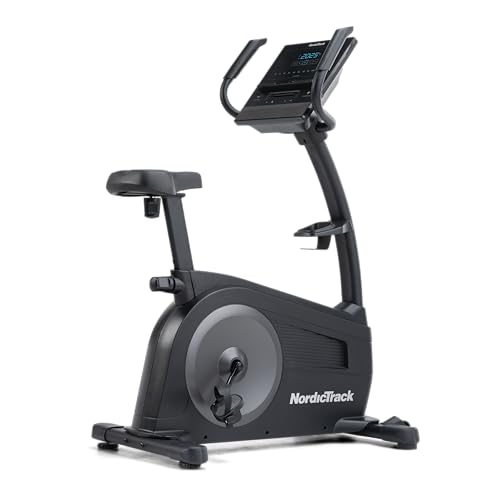
I tested the NordicTrack GX LE over about 10 rides, mixing steady early-morning spins with a handful of harder interval efforts later in the day. The simple takeaway: when it’s discounted (especially around/under ~£500), it’s a cracking upright if you like guided training and want the bike to auto-adjust resistance without paying “premium upright” money.
In real use, the ride feels smooth and controlled across the 24 digital resistance levels, and it’s quiet enough for normal home life. In my space, it sat in the same “won’t annoy the household” category as the better upright bikes I’ve tested — but I still wouldn’t smash max-cadence intervals in the same bedroom as someone asleep. Any bike makes some drivetrain noise when you pedal hard.
Comfort surprised me in a good way. The saddle is wider and firmer than a lot of uprights, and for my longer rides (around 40–60 minutes) that firmness actually worked better than a soft, squishy seat. For tougher intervals, padded cycling shorts made a noticeable difference (as they do on most uprights). The weak point is the handlebars: they’re fine for a basic upright posture, but they’re too basic for long lean-forward efforts. There isn’t a great “resting” hand position, and because the handlebar angle isn’t adjustable, you don’t get that perfectly dialled cockpit feeling if you’re picky about fit.
One thing I genuinely loved: the pedals. The strap system feels more like what I’m used to on proper gym bikes, and honestly they were the best pedals of any upright bike in this roundup. Stability was also strong at higher cadence — no twitchiness or wobble in my rides — but it’s worth noting the GX LE isn’t step-through, so mounting it needs a touch more balance than something with a very open frame.
Now the big “ecosystem” reality check: the console doesn’t give you a library of built-in workout programmes. You get a solid manual mode (ride, adjust resistance, track stats), and then iFIT is where the guided training lives. Pairing is straightforward: open iFIT on a phone/tablet/TV, connect via Bluetooth, and the bike can follow trainer-controlled resistance, which is the whole reason it feels engaging. If you love coached sessions, it’s brilliant. If you hate subscriptions, the bike still works, but you’ll probably feel like you’re not using what you paid for.
One practical annoyance: if you use a large tablet on the shelf, it can block the 5-inch display, so you end up choosing between big-screen coaching and seeing the on-bike stats clearly.
If you’re thinking Zwift: I’d treat this as “possible with tinkering”, not “plug-and-play”. The manual is pretty clear that Bluetooth is intended for iFIT and Bluetooth heart-rate monitors, and other connections aren’t officially supported. You can often improve third-party app use via the QZ app as a bridge, but I’m not going to sell it as a guaranteed Zwift bike.
Quick ownership tips that actually help: register the bike (warranty admin is easier when you do it early), check demo mode if your console behaves oddly (like not sleeping), and if it arrives freezing cold in winter, let it warm up before plugging it in.
NordicTrack GX LE Upright Exercise Bike Key Specs
| Specification | Details |
|---|---|
| Resistance Type | 24-Level Electronic Magnetic |
| Calories Burned (per hour) | 400–500 kcal (based on testing) |
| Flywheel Weight | 9 kg |
| Bike Weight | 46.4 kg |
| Max User Weight | 147 kg |
| Seat Adjustments | Vertical + Horizontal |
| Monitor | 5-inch Backlit LCD, Bluetooth-enabled |
| App Compatibility | iFit (Zwift via QZ app) |
| Noise Level | Very quiet — TV and podcasts friendly |
| Frame Build | Robust steel frame with thick crank system |
| Best For | Low-impact cardio, general fitness, space-saving workouts |
| Avoid If | You have limited mobility or need easy step-through access |
Pros
- ✅ Brilliant value when discounted (especially around/under ~£500)
- ✅ iFIT + auto-resistance makes training far more engaging than manual-only riding
- ✅ Quiet and stable, including at higher cadence
- ✅ Supportive saddle for longer rides (shorts help on harder sessions)
- ✅ Best pedals in this roundup with a proper gym-style strap feel
- ✅ Compact footprint for an upright that feels “serious”
Cons
- ❌ No built-in workout programmes on the console (training content lives in iFIT)
- ❌ Basic handlebars with limited hand positions; not great for long lean-forward efforts
- ❌ Handlebar angle isn’t adjustable, so fit fine-tuning is limited
- ❌ Not step-through, so mounting needs a bit more balance than some uprights
- ❌ Large tablets can block the 5-inch display
Final Verdict
The NordicTrack GX LE is at its best as a quiet, compact, iFIT-powered upright. If you enjoy trainer-led sessions and want the bike to follow resistance automatically, it’s one of the most enjoyable uprights in this price bracket — especially when it’s discounted. You do give up premium cockpit adjustability and multi-grip handlebars compared with pricier uprights, but you get a smooth ride, excellent pedals, strong stability, and an iFIT experience that’s hard to beat for variety. If you’re subscription-averse or want guaranteed third-party app compatibility, I’d look elsewhere — but for low-impact cardio with real structure, it’s a very smart swap into this multi-bike roundup.
Joroto X4S Spin Bike Review: Best for Online Classes & Virtual Training


After putting the Joroto X4S through over 100 rides across six months, I can say this bike is a good-value option among the best magnetic resistance spin bikes, with just enough smart features to make it Zwift-worthy. It’s not trying to be a Peloton killer, but it offers serious value if you want a sturdy, quiet, and performance-driven spin bike for guided classes or interval training.
The ride feel is impressive for the price. It has a 16 kg fixed flywheel, which adds the kind of resistance you expect from a studio bike. That also means it’s not for the faint of heart—or weak knees. Getting the flywheel going takes some force, even at low resistance, so this isn’t the bike I’d recommend to beginners or people in recovery. But if you’re used to spin bikes, it feels smooth and natural, even during standing sprints. I routinely burn 500–700 kcal per hour depending on the workout style, and the Joroto keeps up with me.
I paired the bike with the QZ app, which turned the basic console into a performance dashboard. The built-in monitor shows speed, time, distance, cadence, and resistance—but not power. That’s where QZ bridges the gap. It sends estimated wattage and metrics to Zwift or Peloton, letting me use third-party apps without needing a $2000+ bike. The resistance is manual (not motorised), so while it doesn’t auto-adjust, I could still follow along with Power Zone training if I manually matched resistance cues.
As for comfort, I’d rank spin bikes like this third behind recumbent and upright bikes. You’re leaning forward in a more aggressive posture, which is fine for me—but might be tough for new riders or anyone with back or joint issues. The stock saddle is 6.5″ wide, narrow like most spin bikes, and tolerable for 30–50 minute rides if you wear padded cycling shorts. I eventually swapped in a Velmia City seat to get more comfort for longer sessions. The seat is fully adjustable vertically, horizontally, and in angle, which helped me find the right setup quickly.
One of the best parts of this bike is how customizable it is. The handlebars and seat adjust in all directions, and there’s a built-in media shelf, aero bars, and dumbbell holder. The pedals are toe-cage only out of the box, but I upgraded to clip-in SPD pedals to ride safer and harder during standing intervals. The Q-factor is 195mm, and the ride feels stable and natural even out of the saddle. There’s no jerkiness, no wobble, and it’s quiet enough to use in an apartment without waking anyone up.
Compared to the other exercise bikes in this guide, the Joroto X4S is the one I go to for intensity. It’s not a “casual cruise” machine—it’s built for guided spin classes, intervals, and sweat-heavy cardio. If you’re a beginner, on a budget, or recovering from an injury, the upright or recumbent bikes are better. But if you want to ride hard, use Zwift or YouTube classes, and don’t mind wearing the right gear (padded shorts and clip-in shoes), the X4S punches way above its price point.
Joroto X4S Spinning Exercise Bike Key Specs
| Specification | Details |
|---|---|
| Resistance Type | Manual Magnetic, 100 levels |
| Calories Burned (per hour) | 600–700 kcal (based on testing) |
| Flywheel Weight | 16 kg (fixed) |
| Bike Weight | 49.5 kg |
| Max User Weight | 150 kg |
| Seat Adjustments | Height, fore-aft, and angle |
| Monitor | Battery-powered LCD (shows speed, time, distance, cadence, resistance) |
| App Compatibility | Zwift, Peloton, Kinomap via QZ app |
| Noise Level | Very quiet (suitable for shared spaces) |
| User Height Range | 4’9″ to 6’4″ |
| Best For | Spin classes, interval training, connected apps |
| Avoid If | You want laid-back rides, easy mounting, or have joint/back issues |
Pros
- ✅ Smooth and stable ride with 16 kg flywheel
- ✅ Fully adjustable seat and handlebars for a proper bike fit
- ✅ Quiet enough for apartments and early morning rides
- ✅ Compatible with Zwift, Kinomap, Peloton via QZ app
- ✅ Affordable alternative to high-end spin bikes
Cons
- ❌ No automatic resistance for smart workouts
- ❌ Firm saddle (padded shorts or seat swap recommended)
- ❌ Console is basic and battery-powered
- ❌ Not suitable for seniors or rehab users
Final Verdict
The Joroto X4S is the spin bike I’d recommend for riders who want to get serious about indoor cycling without spending a fortune. It delivers studio-like performance, sturdy build quality, and the flexibility to connect with top-tier cycling apps—if you’re willing to use third-party tools like QZ. Just be honest with yourself: if you’re after casual rides or dealing with injuries, the upright or recumbent bikes in this guide will suit you better. But if you want to sweat hard, sprint standing, and follow real spin classes at home, the X4S is one of the best-value spin bikes I’ve tested.
Strongology Titanium Air Bike Review: Best for Full-Body HIIT & Calorie Burn


The Strongology Titanium Assault Bike has become my go-to machine when I want a full-body, high-intensity workout at home. What sets it apart instantly is the dual-resistance system—it combines air resistance with 15 levels of magnetic resistance, which is rare even among pricier air bikes. The fan gives that classic air bike burn, ramping up intensity based on how hard you push, while the magnetic levels give you just enough room to scale the challenge on lighter days. It’s not as tough as a 20 kg flywheel spin bike, but it’s perfect for those sweaty, explosive HIIT sessions.
The first few rides were a learning curve. At 5’5″, I really appreciated the adjustable seat with both vertical and horizontal sliders, which let me fine-tune my position and avoid arm overstretch. The upright posture is actually more comfortable than a spin bike, thanks to the tall handlebars and larger seat. I did feel some shoulder fatigue during my first few intense rides, but it disappeared once I dialed in my form.
For longer rides (30–40 minutes), padded cycling shorts are helpful. You need to consider that can’t get off the saddle mid-workout like you do on spin bikes, so a comfortable saddle (which is easy with the standard seat post) make a big difference.
What I didn’t love: no bottle holder, poor instructions, and weak customer support via Amazon. That said, I got it built alone and the ride is worth the setup hassle. It’s got a solid frame and feels incredibly stable during standing sprints and heavy pushes. The LCD monitor tracks a ton—time, RPM, calories, watts, heart rate—but it lacks Bluetooth or memory, so no syncing with apps like Zwift or storing your stats. That’s where it loses a step compared to bikes like Joroto X4S.
In terms of noise, this is the loudest exercise bike I own. That fan gets noisy, especially during sprints. It’s not apartment-friendly late at night unless you’ve got soundproofing or headphones. Still, it’s worth the tradeoff if you want the only exercise bike in this roundup that engages both upper and lower body muscles.
After 3 months and over 20 rides, I can confidently say this bike burns 600–700 kcal per hour when doing HIIT. It’s not ideal for casual riders, seniors, or those with joint issues. But if you want to burn max calories in the shortest time and don’t mind a bit of noise and sweat, the Strongology Titanium is hands-down one of the best air bikes under £600.
Strongology Air Exercise Bike Key Specs
| Specification | Details |
|---|---|
| Resistance Type | Air + Magnetic (15 levels) |
| Workout Type | Full-body (arms + legs) |
| Seat Type | Wide padded seat with 9 vertical + 11 horizontal adjustments |
| Dimensions | 154 cm (L) x 56 cm (W) x 128 cm (H) |
| Machine Weight | 50 kg |
| User Height Range | 4’9″ to 6’3″ |
| Max User Weight | 150 kg |
| Power Source | Battery (LCD display) |
| Warranty | 12 months (limited) |
| Best For | |
| Avoid If |
Pros
- ✅ Dual resistance (air + magnetic) adds flexibility for HIIT and lighter workouts
- ✅ Full-body engagement—arms, core, and legs all get a workout
- ✅ Super adjustable seat fits short and tall users
- ✅ Durable steel frame with a stable, commercial feel
- ✅ Excellent calorie burn (600–700 kcal/hr)
- ✅ Compact and includes transport wheels
- ✅ Clear LCD with watt and RPM readouts
Cons
- ❌ No Bluetooth or app compatibility
- ❌ Fan is loud, not ideal for shared or small apartments
- ❌ No bottle holder or onboard storage
- ❌ Poor instructions and no UK-based customer support
- ❌ Not suitable for recovery, seniors, or low-impact workouts
Final Verdict
If you’re looking for a relaxed cruise or entertainment-friendly bike, this isn’t it. But if you’re chasing serious sweat, short bursts of max effort, and total-body conditioning, the Strongology Titanium punches way above its price tag. It’s more intense than recumbents and uprights, more joint-friendly than spin bikes, and far more engaging than any folding bike. Just know it’s loud, intense, and absolutely addictive if HIIT is your thing.
YYFITT Folding Bike Review: Best for Small Spaces & Staying Active


The YYFITT Foldable Exercise Bike is the most feature-rich and comfortable folding bike I’ve personally tested. I used it mainly for light movement throughout the day — typically 1 to 2 short sessions of 15 to 30 minutes — while watching TV or browsing on my tablet. It’s quiet, folds compactly, and includes thoughtful comfort features like an angle-adjustable backrest, a height-adjustable back pad, and an adjustable tablet holder. Assembly took about 40 minutes with the video guide, and after retightening one stabilizer bolt after my first couple of rides, I didn’t have to touch anything else — it’s been smooth and low-maintenance since.
While the bike has 16 resistance levels, the actual max resistance feels similar to level 8 on cheaper folding bikes like the Magic Life or ATIVAFIT. Still, the finer resistance increments make it easier to fine-tune effort for light intervals or rehab-style workouts. I used my Apple Watch to track calorie burn, and the most I’ve burned is around 300 calories per hour when I pushed myself. The built-in LCD monitor is basic and less accurate.
Comfort-wise, this bike outperforms all the other folding bikes I’ve tested. The seat is wider than average and angle-adjustable, and the backrest can be tilted and raised, which helped me shift between upright and semi-recumbent positions. I like changing posture every 5–10 minutes during longer rides, leaning forward for effort or reclining for relaxed pedaling. That said, the X-frame has a high step-over, so it’s not easy to mount for elderly users or those in recovery. I’m 5’5″ and could get full leg extension with the seat at half height, but I wouldn’t recommend this for users over 6 feet tall.
In terms of stability, it’s very solid when seated, especially in semi-recumbent mode, but this is not a bike you want to stand and pedal on. The stabilizers are narrow, and at just 21 kg, the frame can shift slightly when mounting if you’re heavier. The pedal position is angled forward rather than directly underneath like upright bikes, which takes getting used to and reduces pedaling power somewhat.
It folds down small using a scissor-action mechanism and takes about 20 seconds once you’re familiar with it. I ended up keeping it open during the day and only folding it at night or when cleaning. It has wheels and rolls smoothly on hard floors, but not as easily on carpets. Despite its lightweight build, it feels well-made with thicker tubing than budget folding bikes I’ve tested.
Noise is practically non-existent. There’s zero sound when changing resistance and only minor squeaks when using the arm bands. I often ride it next to my sleeping wife and never need to increase the TV volume. This is by far the quietest bike I’ve tested in this roundup.
I don’t recommend it for serious cardio, HIIT, or anyone expecting strong resistance. But for light home exercise, casual movement, or rehab purposes — especially in small apartments or shared spaces — it’s hard to beat.
YYFITT Folding Exercise Bike Key Specs
| Specification | Details |
|---|---|
| Resistance Levels | 16 magnetic resistance levels |
| Arm Resistance Bands | Included, moderate tension |
| App / Bluetooth Connectivity | No |
| Tablet/Phone Holder | Yes, angle-adjustable |
| Seat Type | Wide with angle adjustment and backrest height adjustment |
| Recommended User Height | 5’ to 6’ |
| Max User Weight | 120 kg |
| Bike Weight | 21 kg |
| Dimensions (Upright) | 26.8L x 19.3W x 45.7H inches |
| Dimensions (Folded) | 19.7L x 19.3W x 54H inches |
| Warranty | 12 months |
| Best For | |
| Avoide If |
Pros
- ✅ 16 levels of magnetic resistance, with finer control than most folding bikes
- ✅ Angle-adjustable seat and backrest height, rare for compact bikes
- ✅ Adjustable tablet holder makes screen viewing easier during rides
- ✅ Stable when seated, especially in semi-recumbent mode
- ✅ Quietest bike I’ve tested, ideal for shared apartments or night workouts
- ✅ Compact folded footprint, easy to roll away on hard floors
- ✅ Built-in arm bands offer light upper-body movement
Cons
- ❌ Resistance is weak even at max — not for serious cyclists
- ❌ High step-over frame, not easy to mount for elderly or injured users
- ❌ Folding/unfolding requires effort due to 21 kg frame
- ❌ Monitor is basic, no app support or advanced metrics
- ❌ Unusual pedal angle reduces pedaling power if you’re used to upright/spin bikes
Final Verdict
The YYFITT Foldable Exercise Bike is ideal for casual home use, light rehab, and staying gently active throughout the day — especially if you live in a small apartment or need to work out without disturbing others. It’s the quietest, most adjustable folding bike I’ve tested, and while it lacks the resistance or stability for intense workouts, it delivers good comfort and convenience for the price. Just keep in mind it’s not suitable for seniors, tall users, or anyone expecting a high-intensity training machine.
How I Chose the Best Exercise Bike in Each Category (Buying Guide)
Not all exercise bikes serve the same purpose — and after testing dozens of them, I’ve realized most people don’t even know how different each type truly is until they ride them. So in this section, I’ll break down exactly what I look for when testing bikes in each category, based on real-world use and rider needs. Whether you’re short on space, recovering from an injury, or looking to crush intense intervals, here’s what matters most.

Recumbent Exercise Bikes

When I test recumbent bikes, I focus on ease of use, especially for seniors, rehab users, or anyone with limited mobility. The bike should allow you to get on and off easily with a low step-through frame, and once seated, you should be able to access everything without leaning forward. That means console buttons must be reachable from the reclined position and seat adjustments should be intuitive and sturdy. I also look for a ventilated seat back, which helps during longer sessions, and quiet magnetic resistance, since these bikes are often used in shared spaces. Bonus points if the monitor is backlit and Bluetooth-compatible, but comfort and accessibility come first.
Upright Exercise Bikes

For upright bikes, I pay close attention to adjustability and ergonomic setup. Your saddle and handlebars should both adjust vertically and horizontally so you can dial in your riding position — this makes a huge difference in comfort during 30-60 minute rides. The saddle should be well-padded or easily replaceable, because many upright bike seats are notoriously hard. I also test the resistance curve to make sure it feels smooth and challenging enough for regular cardio. A good upright bike should offer preset workout programs, Bluetooth connectivity, and a clear monitor, ideally with heart rate tracking and app compatibility like Zwift or Kinomap.
Spinning Exercise Bikes

Spin bikes are for those who want a more intense ride, so the number one thing I look for is how the bike handles out-of-saddle efforts. The frame should feel rock-solid during sprints and climbs. I always prioritize magnetic resistance over friction, because it’s silent, smoother, and requires no maintenance. I also test whether the flywheel weight gives enough momentum for fluid pedaling — and whether the resistance ramps up smoothly across the dial. A proper spin bike should also come with SPD-compatible pedals, or at least allow upgrades. Since most spin bikes don’t come with advanced consoles, I test third-party compatibility with apps like Peloton, Zwift, or QZ using Bluetooth or cadence sensors.
Air Exercise Bikes

Air bikes are built for brutal, high-intensity workouts — and that’s exactly how I test them. The key here is frame strength and stability. When you’re pushing out 600+ watts of fan resistance, a flimsy frame wobbles and ruins the session. I make sure the bike stays stable on both carpet and hard floors, especially during max effort intervals. The fan should spin smoothly and offer a progressive resistance curve that scales with your effort. I also check for foot pegs, which are essential for isolating arm-only workouts, and a monitor that tracks intervals, RPM, calories, and heart rate. Pre-programmed HIIT modes are a nice bonus, but durability and fan resistance performance come first.
Folding Exercise Bikes

Folding bikes are all about compact design without sacrificing usability. I focus on whether the bike feels sturdy in both upright and semi-recumbent modes, because many 2-in-1 bikes wobble or tip if the frame is too light. The seat should adjust high enough for proper leg extension and be wide and padded enough for extended sitting. I test folding time and ease, since some models take real effort to collapse and store. Extra features like angle-adjustable tablet holders, resistance bands, and quiet magnetic resistance are important, especially if you plan to use the bike for light activity while watching TV or working from home. I also check the step-over height — many X-frame designs are harder to mount for seniors or those with mobility concerns.
Which Exercise Bike Is Right for You? Final Thoughts & Next Steps
After testing every one of these exercise bikes myself, I can confidently say this: there’s no single “best” exercise bike for everyone — but there is a right one for you.
- If your goal is low-impact rehab or joint-friendly cardio, a recumbent bike like Nordictrack GX LE recumbent will give you the support you need.
- If you want a more traditional upright feel with a balance of comfort and performance, something like the Nordictrack GX LE upright is a reliable pick.
- If you prefer powerful lower-body training with a wide range of online cycling content, the Joroto X4S spin bike will push your legs to their limit.
- If you’re chasing serious sweat sessions or high-intensity calorie burn, the Strongology Air Bike.
- And if you’re tight on space or just want to stay gently active while watching TV, the YYFITT folding bike is perfect for keeping your legs moving without taking over your living room.
The key is to match your bike to your fitness level, riding style, and space at home. Each bike in this roundup was selected not just for specs, but because it serves a very specific need. So instead of asking, “What’s the best exercise bike overall?” — ask, “What do I want this bike to help me do?” Whether it’s recovery, cardio, muscle tone, or just staying active at home, there’s an indoor bike in this list that fits your needs perfectly. And because I’ve personally tested each one, you’re getting real-world insight, not just spec sheets. I hope this guide helped you feel more confident about choosing the right bike for your goals.
